Nickel Alloy Applications: A Field Engineer’s Guide to Matching the Grade to the Problem
After 25 years of supplying nickel alloys to plants that operate at the edge of what most metals can survive, I’ve watched procurement teams make the same mistake: they ask for a nickel alloy because the environment is “harsh,” then specify the wrong grade and wonder why the component still fails. The short answer is simple. The full answer depends on what exactly is trying to destroy your part.
Industry handbooks organize nickel alloys by sector—aerospace, chemical processing, oil and gas, power generation. That structure looks clean on paper, but it is almost useless when you’re standing in front of a specification sheet trying to decide between Inconel 625 and Hastelloy C-276. The better framework is failure-mode first: what is the primary threat to your component? Corrosion, heat, or a combination of both? Answer that, and the grade selection becomes obvious.
When Corrosion Is the Enemy
Stainless steel handles atmospheric corrosion and freshwater well enough. The problem starts when you introduce chlorides, strong acids, or sour gas. In those environments, standard 304 or even 316 will pit, crevice corrode, or stress-corrode crack within months. I’ve seen 316L heat exchanger tubes fail in six months on a coastal chemical plant because the chloride concentration was just high enough to break down the passive layer.
Chemical Processing and Acid Environments
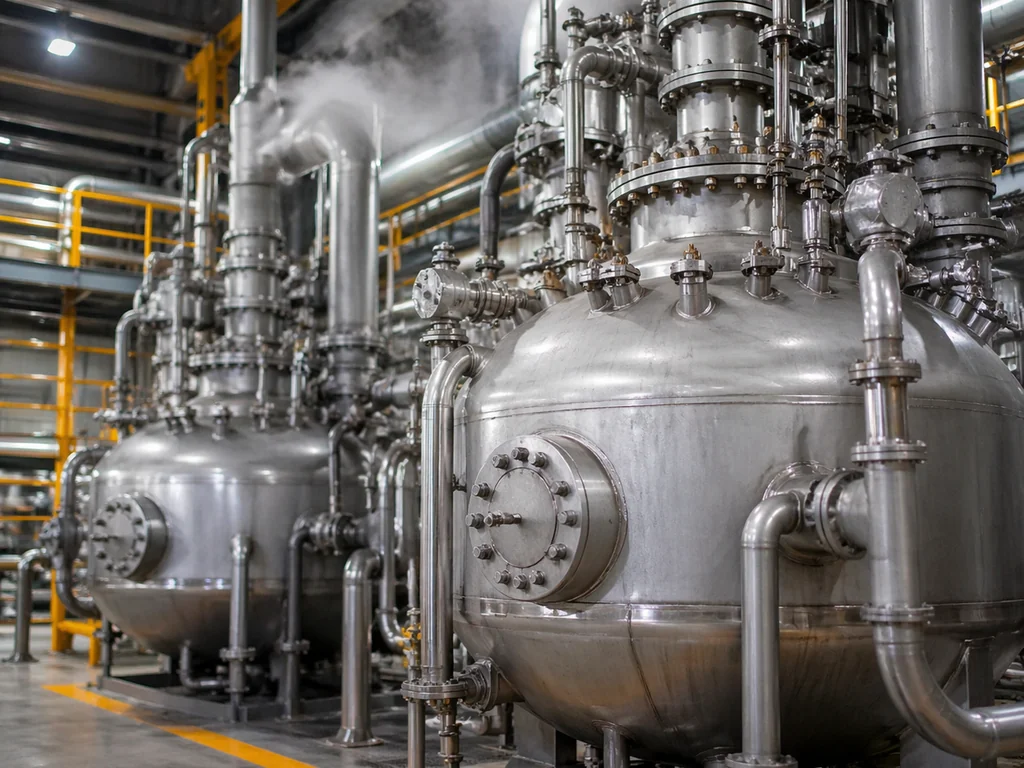
This is where nickel-molybdenum alloys earn their price. Hastelloy C-276 resists hydrochloric acid, sulfuric acid, and chlorine gas at concentrations that rapidly destroy stainless steel. Chemical processors specify it for reactors and scrubbers not because it is cheap—it is roughly five to ten times the cost of 316—but because unplanned shutdowns cost more than the material premium. Alloy 825 was developed specifically to improve pitting and crevice corrosion resistance over conventional stainless grades in aggressive chemical environments.
Marine and Offshore Service
For marine and offshore applications, Monel 400 handles seawater and brine with minimal attack, which is why it remains standard for pump shafts, valves, and propeller shafts in saltwater service. The pattern is always the same: if your failure mode is chemical attack, you need a nickel alloy with high molybdenum content and a microstructure that resists localized corrosion. Stainless steel is a cost-effective default, but it is not a universal solution.
When Heat Destroys Everything Else

Temperature changes the equation completely. Austenitic stainless steels like 304 and 316 maintain reasonable strength up to about 815°C. Above that, they soften, scale aggressively, and lose structural integrity. If your process involves sustained temperatures above 900°C—or thermal cycling that repeatedly stresses the component—you’ve left stainless steel territory entirely.
Furnaces, Exhaust, and Piping
Inconel 600 is the baseline for oxidation resistance in furnace components and heat-treating equipment. Inconel 625 adds niobium for improved fatigue resistance and weldability, which is why it dominates exhaust systems, ducting, and offshore piping that sees both thermal stress and corrosive media.
Aerospace and Creep-Limited Design
Inconel 718 is the workhorse of the aerospace industry for a reason: it maintains creep resistance and tensile strength at temperatures exceeding 1,100°C. Jet engine turbine blades operate in environments that would liquefy most metals, and the commercial aviation backlog—currently exceeding 13,000 aircraft—keeps demand for 718 and related superalloys at historic highs.
Creep is the failure mode most procurement teams ignore until it is too late. Above approximately 540°C, time-dependent deformation under load becomes the dominant design constraint. Stainless steels are generally limited to lower-stress applications above 600°C. Nickel alloys are engineered specifically to resist creep rupture, and that capability is what justifies the material cost in gas turbines, nuclear reactors, and high-temperature process vessels.
When You Need Both: Corrosion and Heat
The most expensive mistakes happen when engineers optimize for one failure mode and ignore the other. A component in a gas-fired process heater might see temperatures high enough to require Inconel, but if the combustion environment also contains sulfur compounds, the alloy needs chromium and molybdenum in the right balance to resist high-temperature gas corrosion.
In these cases, grade selection becomes a systems decision. Inconel 625 performs well in both hot and corrosive environments, which is why it is specified for flare stacks, scrubbers, and subsea hardware that must survive sour-gas conditions at depth. The global nickel alloy market, valued at approximately $16 billion in 2025 and growing at roughly 5% annually, is increasingly driven by these dual-threat applications in hydrogen infrastructure, deepwater oil and gas, and advanced power generation.
The Cost Reality Nobody Talks About
Here is an uncomfortable truth that most comparison articles won’t tell you: nickel alloys are not expensive because suppliers markup them aggressively. They are expensive because they contain significant amounts of nickel, chromium, molybdenum, and niobium, and because the melting and processing requirements are far more demanding than standard stainless steel. Inconel 625 routinely trades at $35 to $45 per kilogram, roughly five to ten times the cost of 304 stainless steel.
But the purchase price is the wrong metric. In corrosive high-temperature service, nickel alloys typically deliver service lives approximately 40% longer than stainless steel alternatives. When you factor in unplanned shutdowns, replacement labor, and lost production, the total cost of ownership usually favors the nickel alloy within the first maintenance cycle. The single most expensive mistake I see on every project? Optimizing for material purchase price while ignoring the cost of premature failure.
How to Specify What You Actually Need
Three Questions Before You Specify
If you’re writing a specification or evaluating supplier quotes, start with three questions:
- What is the maximum operating temperature, and is it sustained or cyclic?
- What chemicals or environmental factors are present—chlorides, acids, sour gas, seawater?
- What is the cost of failure—downtime, safety risk, or regulatory liability?
When Stainless Steel Is Enough
If your answers are “below 600°C,” “mild atmospheric corrosion,” and “low,” you probably do not need a nickel alloy at all. Stainless steel will serve you better at a fraction of the cost. If your answers are “above 900°C,” “aggressive acids or chlorides,” and “unacceptable,” then nickel alloy selection is not optional—and the specific grade should be dictated by the dominant failure mode, not by industry convention.
For hydrogen energy applications where material compatibility under high pressure is critical, the selection criteria narrow further. The same principles apply: identify the failure mode first, then match the alloy. If your project involves hydrogen storage or high-temperature process equipment, send your specifications or drawings—our team will respond quickly with a workable solution.
Author: NewQiujing Group