904L vs 316L Stainless Steel: When the Upgrade Is Worth It
Most 316L-to-904L upgrades are decided too late. The buyer sees rust marks, pitting around welds, or a maintenance report that says the cleaning solution changed. Then the next order becomes urgent, expensive, and poorly specified.
904L is not a luxury version of 316L. It is a higher-alloy austenitic stainless steel for jobs where chlorides, acids, wet deposits, or cleaning chemistry make ordinary 316L too close to failure. If the environment is mild, 316L is still the cleaner buying decision. If the environment is aggressive, staying with 316L can turn a lower unit price into a shutdown cost.
The useful question is not which grade is better. The useful question is which risk you are buying against: pitting, crevice corrosion, acid attack, weld-area corrosion, availability, or fabrication cost.
| Buyer question | Choose 316L when | Move toward 904L when |
|---|---|---|
| Chlorides | Exposure is occasional, rinsed, or moderate | Wet chloride exposure is continuous or difficult to clean |
| Acid service | Chemistry is mild and field history is good | Sulfuric or phosphoric acid exposure drives failures |
| Cost control | Failure would be cosmetic or easy to replace | Failure stops production or contaminates product |
| Availability | Fast stock and common processing matter | Lead time can support a more specialized grade |
When does 904L justify the higher alloy cost?
The buying judgement
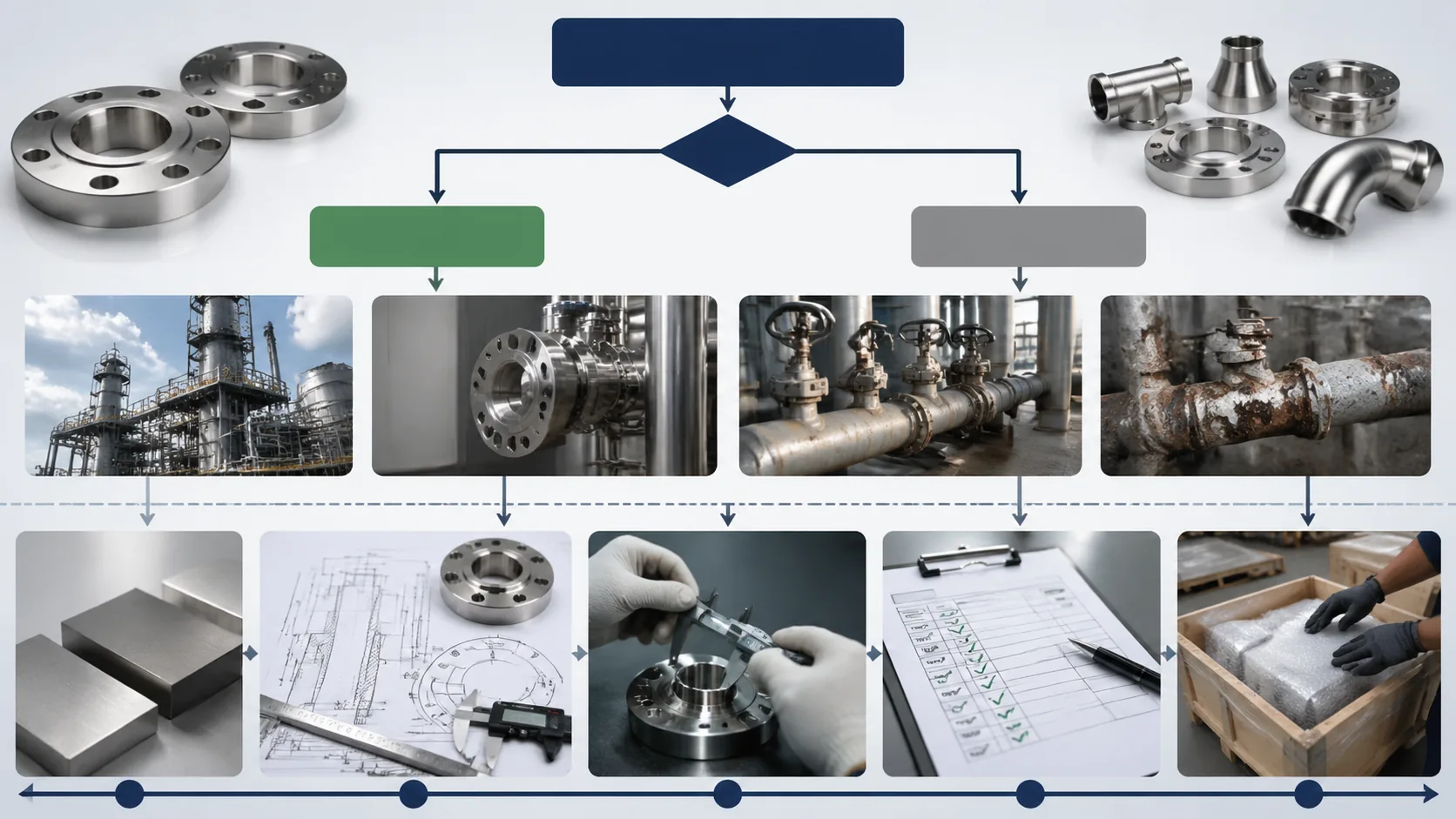
904L earns its price when corrosion risk is not theoretical. Chloride washdown, warm brine, acidic cleaning cycles, and stagnant wet pockets are the usual triggers. The grade carries more alloying content than 316L, so it is bought for a specific service problem, not for a stronger product name.
Start with five facts: chloride level, pH, temperature, exposure time, and whether deposits can sit on the surface. If any of those answers are missing, the quote comparison is premature. A buyer cannot judge 316L against 904L from the price sheet alone.
The RFQ control
The strongest case for 904L appears when the part is hard to inspect or replace. A decorative cover with occasional splash can live with a different risk profile than a tank, filter body, or chemical handling component buried inside a production line.
Where does 316L still make the better buying decision?
The buying judgement
316L remains the practical choice for many food, marine, architectural, and industrial parts. It is easier to source, easier to replace, and usually easier to combine with common sheet, plate, pipe, tube, bar, and processing requirements.
Do not upgrade because a competitor quote mentions 904L. Upgrade because the service data says 316L is exposed beyond its comfort zone. Poor drainage, rough welds, trapped deposits, and the wrong surface finish can make 904L look bad too. Alloy choice does not rescue bad design.
The RFQ control
For a buyer, the best 316L decision is still a controlled decision: name the grade, standard, finish, thickness tolerance, MTC requirement, and packing method. The problem is not always under-specification. Over-specification can waste budget and slow delivery.
How should welds and fabrication change the decision?
The buying judgement
Welded parts need a stricter review than flat stock. The weld area sees heat, filler metal, surface discoloration, and possible crevices. That is where corrosion often starts, especially when cleaning chemicals or chlorides sit in the joint.
For 316L, ask whether passivation, pickling, or weld cleanup is required. For 904L, ask the same question, then add filler compatibility and heat control. If the order includes bending or cutting before shipment, the drawing should travel with the material specification.
The RFQ control
A clean MTC does not fix a bad weld detail. The RFQ should tell the supplier whether they are quoting raw material only or a processed part that must survive a real service environment.
What should buyers put in a 904L or 316L RFQ?
The buying judgement
The RFQ should remove guessing. Include grade, product form, standard, thickness or schedule, quantity, finish, tolerance, MTC, inspection requirement, and delivery condition. If the material will be processed, include the drawing, bend radius, cutting method, edge requirement, and packaging expectation.
For imported material, also ask how heat numbers will be marked and preserved after cutting. Traceability matters more when the grade is expensive or when the part enters regulated equipment.
The RFQ control
NewQiujing can quote stainless steel sheet, plate, pipe, tube, bar, rod, wire, and processed material more accurately when the RFQ includes both service environment and fabrication notes. That keeps the discussion on risk, not adjectives.
What mistakes make 904L quotes hard to compare?
The buying judgement
The first mistake is comparing one supplier's 904L plate with another supplier's processed 904L part. The second is ignoring surface finish and inspection. The third is treating lead time as a minor line item when the project is already late.
Check whether each quote includes the same standard, delivery condition, MTC, third-party inspection, cutting, packing, and freight scope. A lower material price can disappear when processing and inspection are added later.
The RFQ control
If the order is for a corrosion-sensitive application, do not approve a quote that only says "904L stainless steel". That is a grade name, not a purchase specification.
How should competing supplier quotes be compared?
Normalize the scope first
Put every quote into the same scope before comparing price. The scope should include material form, standard, size tolerance, surface condition, processing, inspection, packing, and document requirements. If one quote includes cutting and another quote only covers raw material, the lower number is not evidence of a cheaper supplier.
Look for missing risk lines
The missing line item usually becomes the later argument. Common gaps include MTC format, heat number marking after cutting, surface protection, edge condition, dimensional inspection, packing photos, and third-party inspection. Ask suppliers to revise the quote instead of trying to remember verbal promises.
Treat lead time as a technical variable
Lead time is not only a logistics number. Fast shipment can mean standard stock, but it can also mean the supplier skipped processing, inspection, or packing details. Slow shipment can be reasonable when the order needs non-stock thickness, special finish, strict tolerance, or outside inspection. Compare usable delivery, not calendar days alone.
What should receiving inspection check?
Documents
Start with the documents because they are easier to correct before unloading than after production starts. Match the purchase order, invoice, packing list, MTC, grade, heat number, size, quantity, and any inspection report. If the heat number on the material does not match the MTC, stop the material before it enters production.
Dimensions and surface
Check size, thickness, wall, width, length, straightness, flatness, edge condition, and surface finish against the RFQ. For processed material, check the drawing revision too. A small dimensional mismatch can create more cost than a visible surface defect because it may not be found until the next operation.
Packing and handling damage
Inspect packing before removing it. Water marks, broken straps, crushed edges, torn film, and mixed labels tell the buyer how the shipment was handled. Take photos while the material is still packed. That evidence is much stronger than a complaint written after parts have been moved around the shop.
What should the buyer check before sending the PO?
A final RFQ check should be boring. That is the point. If the grade, form, standard, tolerance, finish, processing scope, inspection, marking, and packing are all named, the supplier has less room to guess.
| RFQ line | Why it belongs in the order |
|---|---|
| Service environment | Prevents a blind grade comparison |
| Surface finish | Affects cleanability and corrosion behavior |
| Weld or bend requirement | Changes filler, radius, and inspection needs |
| MTC and heat marking | Protects traceability after processing |
| Packing method | Prevents surface damage before installation |
The buyer should also keep one internal note that explains why the selected grade or form is acceptable for the service. That note does not need to be long. It only needs to name the exposure, the part function, and the failure mode being avoided.
For repeat orders, keep the approved wording as a purchasing template. That prevents a future buyer from shortening the RFQ back to a grade name and quantity, which is how many avoidable material disputes return six months later.
Conclusion
Choose 316L when the service is known, moderate, and easy to inspect. Choose 904L when the chemistry or downtime risk makes 316L too close to the edge. The expensive mistake is not choosing the lower grade; it is choosing either grade without naming the environment, finish, weld condition, inspection requirement, and traceability method. A useful quote should make those risks visible before the purchase order is signed.
Author: NewQiujing Group