How to Evaluate a Stainless Steel Supplier: A 10-Point Checklist for Import Buyers
If you’re reading this, you’re probably in the middle of evaluating stainless steel suppliers — comparing quotes, checking websites, wondering who to trust with your first order.
Here’s what I’ve learned from working with buyers across 10+ industries: the suppliers who look good on paper (good price, fast response, professional website) aren’t always the ones who deliver consistently. And the ones who do deliver consistently don’t always look the best on paper.
This checklist gives you a repeatable framework — 10 criteria organized into three tiers — so you can compare suppliers on what directly affects your project outcomes and delivery reliability.
Tier 1: The Non-Negotiables
These are the criteria you verify before sending an RFQ. If a supplier fails here, move on.
1. Material Traceability — Can They Prove What They’re Selling?
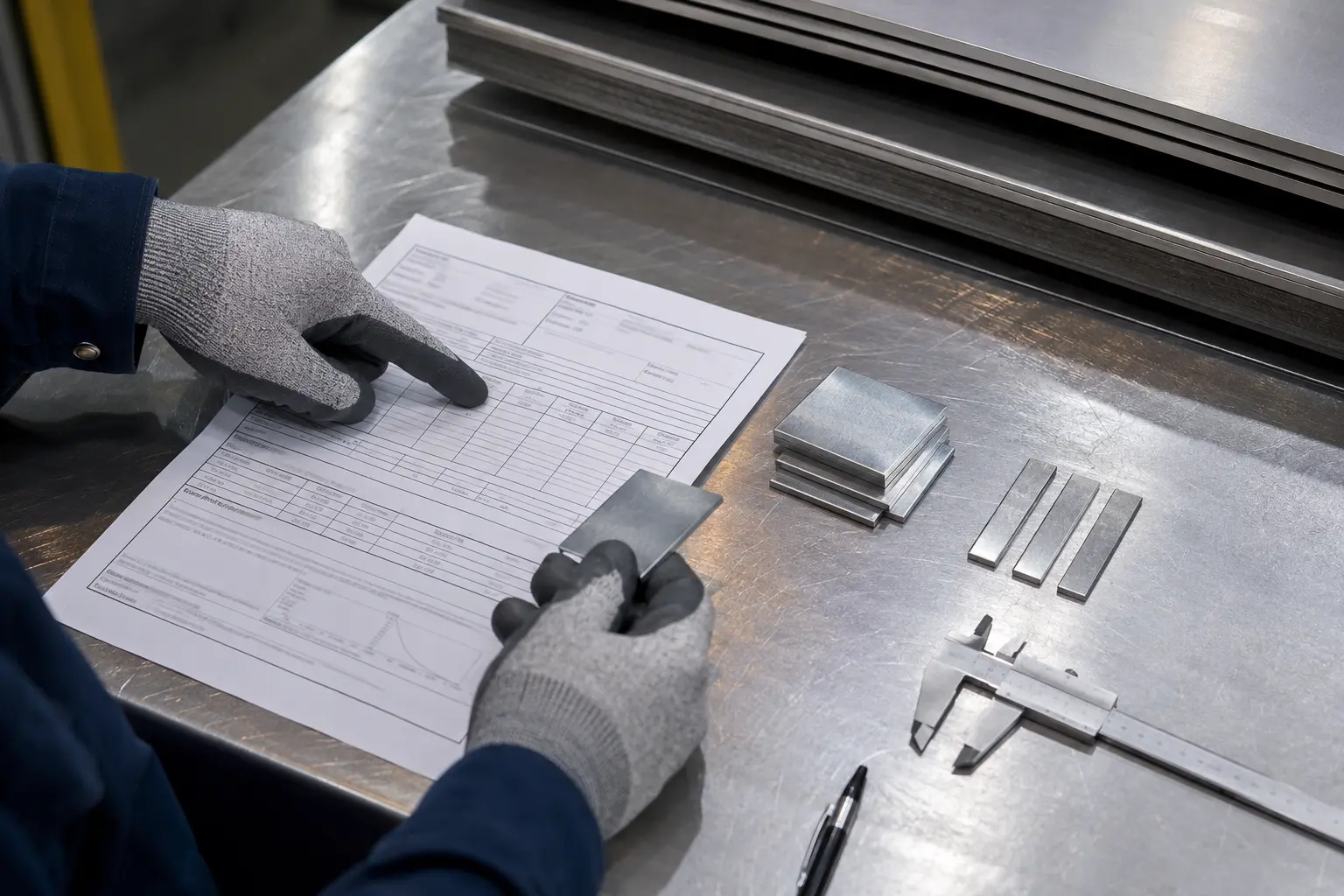
Mill test certificate verification for stainless steel material traceability with heat number and metal samples
The single most important question: can the supplier provide a Mill Test Certificate (MTC) that matches what they’re quoting?
A legitimate MTC shows:
- Heat number and chemical composition
- Mechanical properties (tensile, yield, elongation)
- Applicable standard (ASTM A240, A276, A479, etc.)
- Date of manufacture and mill origin
What to watch for: some suppliers provide a “typical” MTC that doesn’t correspond to your actual shipment. Ask for a sample MTC from a recent order — then verify the heat number format matches industry standards. If the MTC mentions grades or standards that don’t make sense for the product form quoted, that’s a red flag.
How to test this: ask “Can you provide a mill test certificate matching the heat number of my order?” and see whether they understand the question.
Read more: How to Read Stainless Steel MTC: A Step-by-Step Guide for Buyers
2. Quality Inspection Protocols — Not Just “We Have QC”
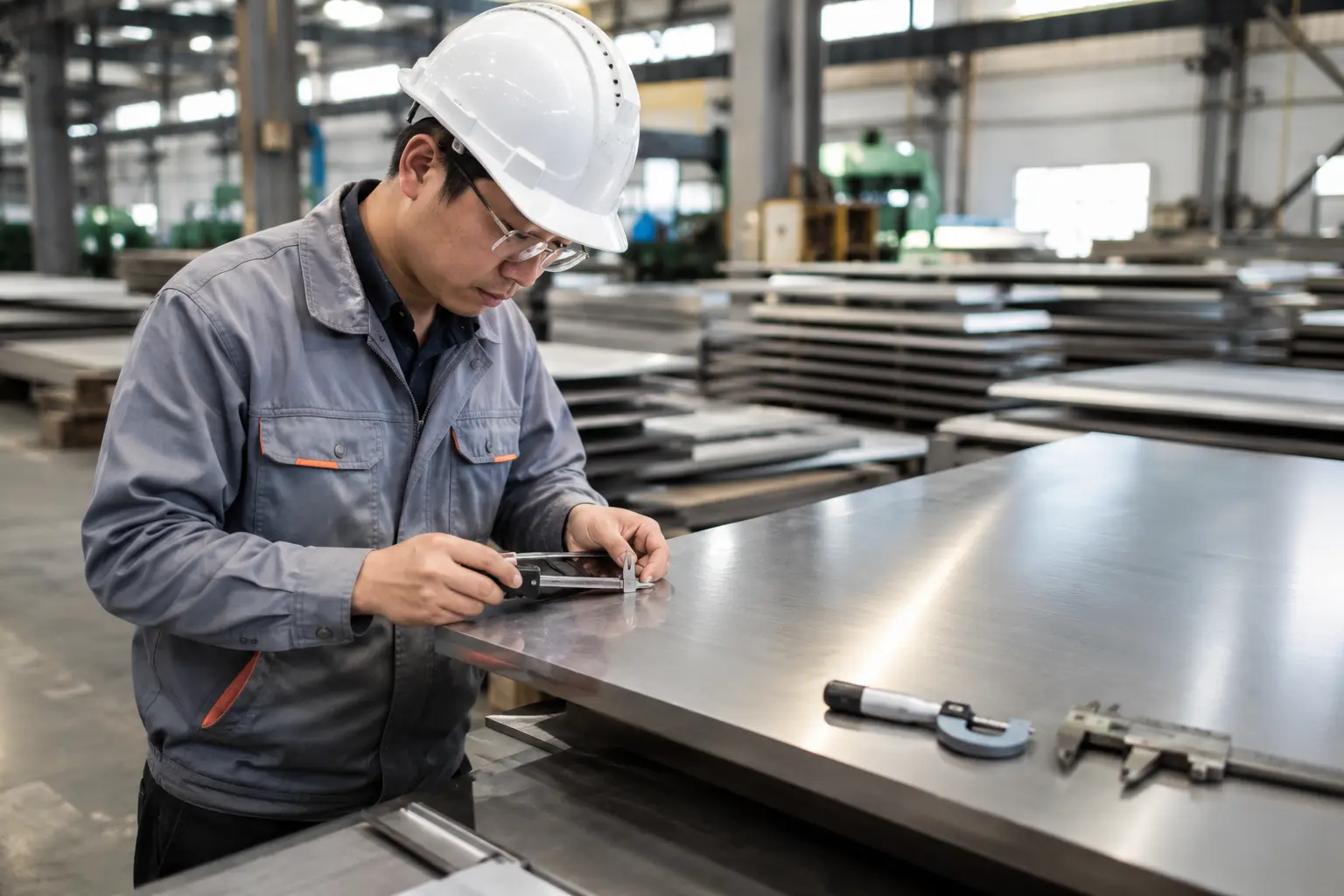
Quality inspector checking stainless steel plate thickness and surface finish during supplier evaluation
Every supplier will tell you they have quality control. The question is what exactly their QC covers.
A serious supplier should be able to describe:
- Incoming inspection: Do they verify material against the MTC upon receipt?
- In-process inspection: For processing services (cutting, bending, surface finishing), what dimensional tolerances do they hold?
- Final inspection: Before shipment, do they check surface defects, thickness, flatness, and packaging integrity?
Some suppliers offer third-party inspection (SGS, Bureau Veritas, TÜV). That’s a strong signal — but don’t treat it as a substitute for their own QC. A supplier who needs a third party to catch defects is a supplier whose internal QC is weak.
3. Product Range — Depth Matters More Than Breadth
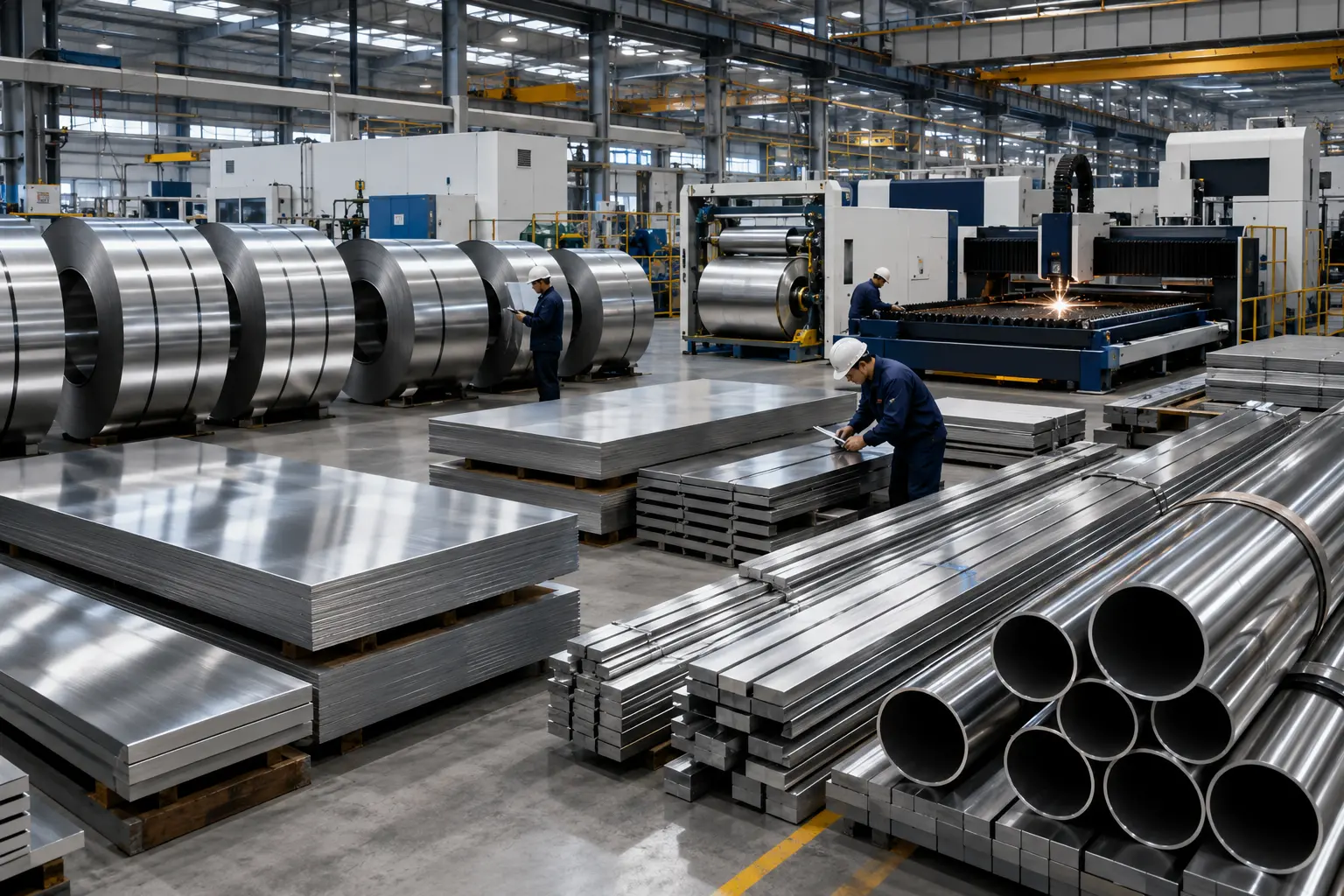
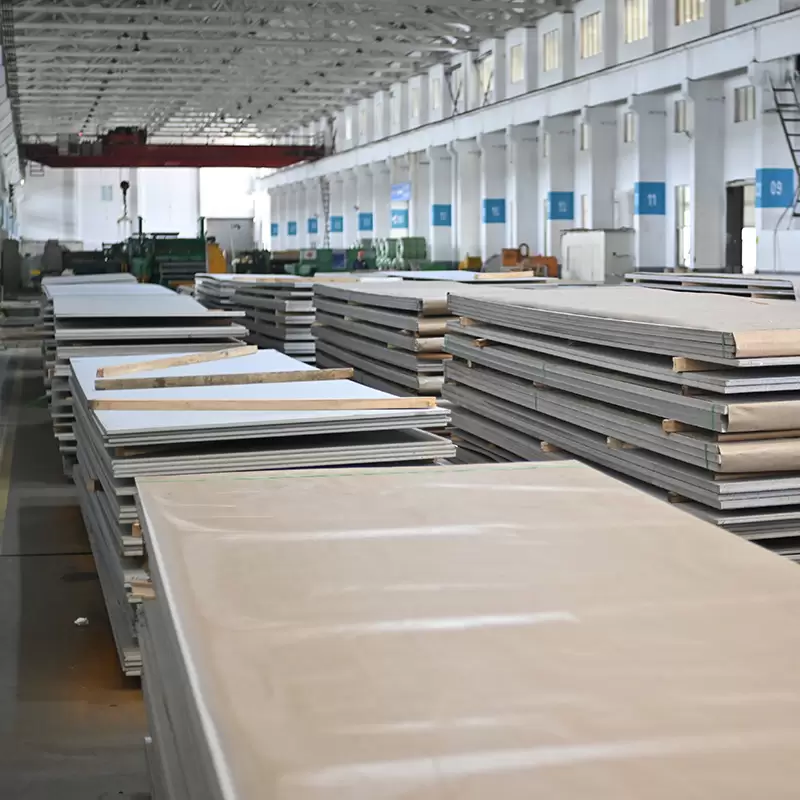
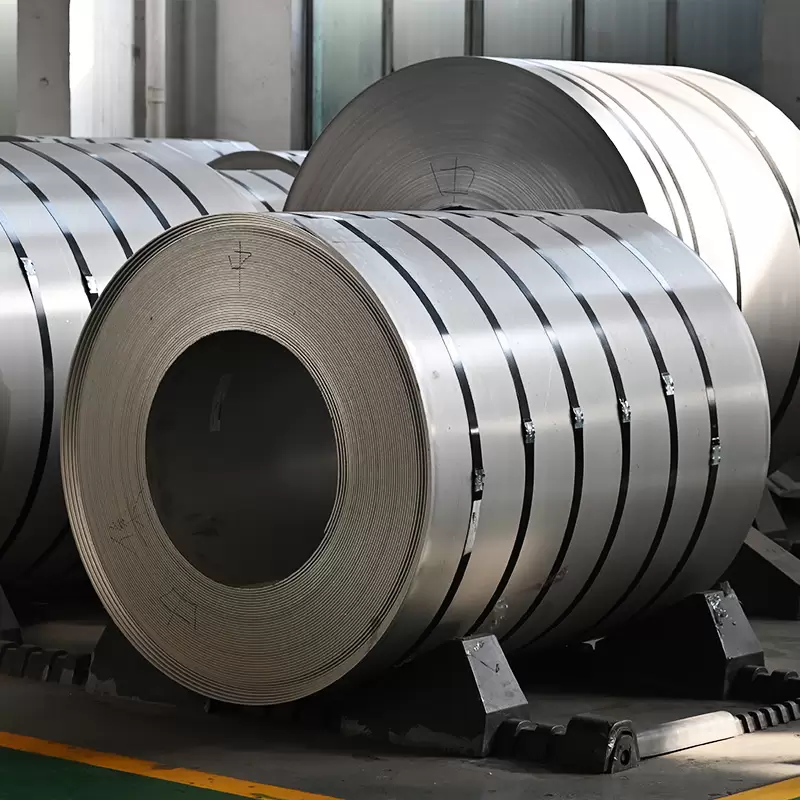
Stainless steel supplier warehouse with product inventory and processing capabilities for coils, sheets, plates, bars, and pipes
A supplier who stocks hundreds of grades might not stock enough of the one you need. Look for:
- Depth in your grades: Do they carry the specific grades you typically order (304, 316L, 2205, etc.) in the forms you need (sheet, plate, bar, pipe)?
- Surface finish options: 2B, BA, No.4, HL — do they stock these or only order on request?
- Custom processing: Can they cut to size, slit coils, apply protective film, or bend to specifications?
A supplier who specializes in your industry’s requirements will have better availability and faster lead times than a generalist who covers everything superficially.
Tier 2: Operational Reliability
These criteria separate competent suppliers from excellent long-term partners.
4. Processing Capability — The “Value-Add” That Saves You Time
Many buyers source raw material from one supplier and processing from another. That works, but it adds handling steps, shipping costs, and quality risk.
A supplier with in-house processing can:
- Cut coils to sheet or strip to your exact dimensions
- Level and slit material to tighter tolerances
- Apply surface finishes (lamination, embossing)
- Perform bending, welding, and custom fabrication
The advantage isn’t just convenience. When a supplier processes their own material, they take responsibility for both material quality and dimensional accuracy. If something goes wrong, there’s no finger-pointing between separate vendors.
Related reading: How to Evaluate a Stainless Steel Laser Cutting Service: Quality Metrics, Tolerances, and Supplier Checklist
5. Export Experience — International Shipping Is Not Trivial
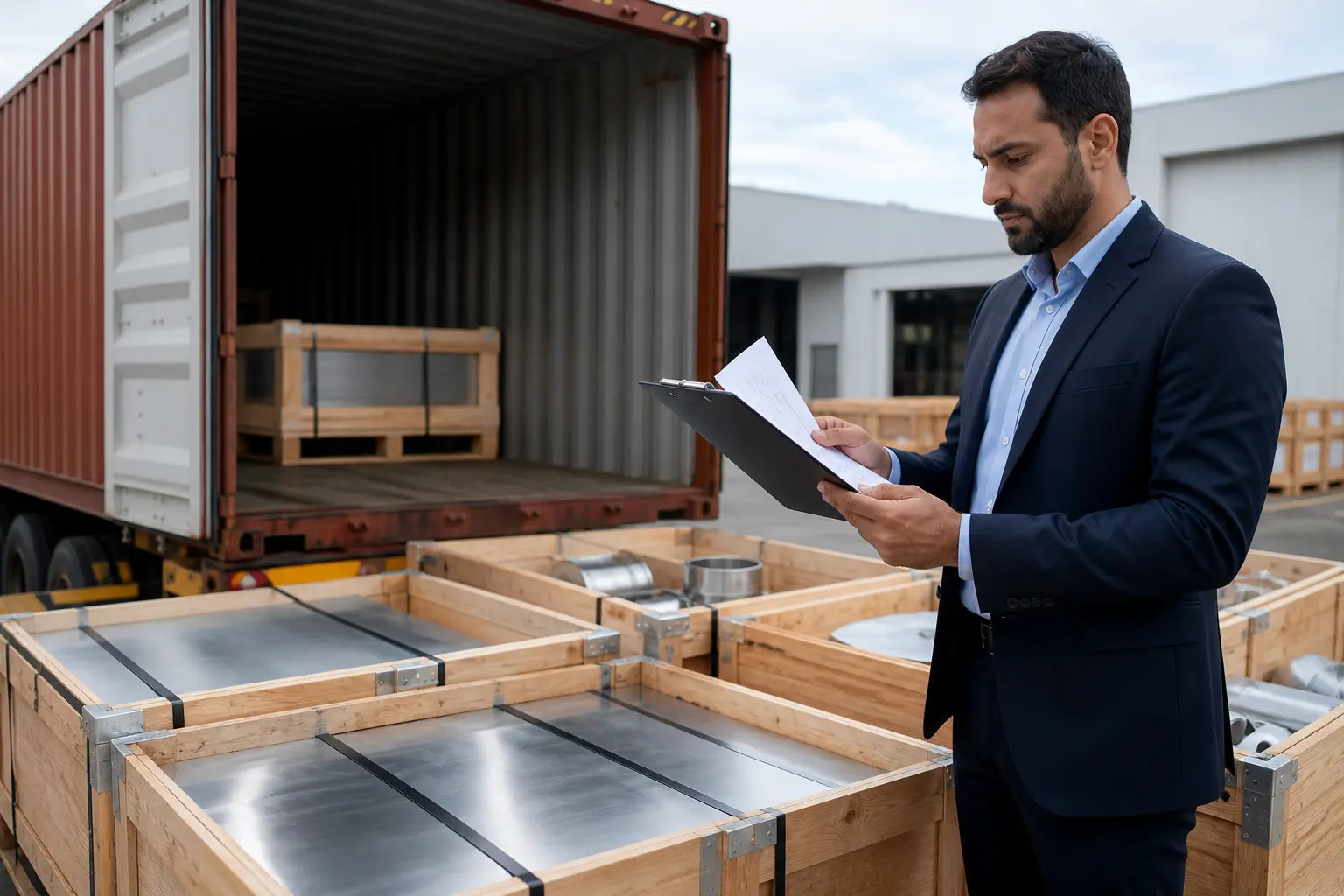
Export-ready stainless steel products with supplier evaluation checklist for international import buyers
This is the criterion most commonly overlooked by first-time importers. Exporting stainless steel requires:
- Export documentation: Commercial invoice, packing list, bill of lading, certificate of origin, and sometimes FORM E for preferential tariff treatment
- Proper packaging: Seaworthy packing for ocean freight — wooden crates, steel strapping, waterproof wrapping, and rust-preventive paper if needed
- Container loading expertise: Weight distribution, mixing different product forms, avoiding damage during transport
- Customs clearance support: Providing the right HS code classification and documentation to avoid delays at destination
Ask potential suppliers: “What percentage of your business is export?” A supplier who does 60%+ export is typically more reliable to work with than one who does 10%.
6. Lead Time Reliability — Not Just How Fast, But How Consistent
Every supplier will quote a lead time. The question is whether they meet it.
Ask for:
- Standard lead time for stock items
- Processing lead time for custom work
- Recent on-time delivery rate (if they track it)
Also ask what their process is when lead times slip. Do they proactively communicate delays, or will you only find out when the shipment doesn’t arrive?
A supplier who under-promises and over-delivers on lead time is worth more than one who promises the world but delivers inconsistently.
Tier 3: Differentiation Factors
These are the factors that turn a good supplier into a strategic partner.
7. Communication Responsiveness — Test It Before You Commit
The speed and quality of a supplier’s pre-sales communication is a reliable predictor of their post-sales behavior.
Test this during the evaluation phase:
- How quickly do they respond to your initial inquiry?
- Do they answer your specific questions or send generic responses?
- Are they proactive about suggesting alternatives when your requested specification isn’t optimal?
- Is their English (or your language) clear enough to avoid misunderstandings?
A 24-hour response time to emails is a reasonable benchmark. Anything slower suggests either understaffing or low priority.
8. Minimum Order Quantities (MOQs) and Flexibility
Some suppliers have rigid MOQs that force you to order more than you need. Others are flexible and willing to start with smaller trial orders.
During evaluation, ask:
- “What is your MOQ for this grade and form?”
- “Can we start with a trial order of one pallet/coil?”
- “Do you offer stock-holding programs for repeat orders?”
Flexibility on MOQ is a strong signal that the supplier values the relationship, not just the transaction.
9. Pricing Transparency — Understand What You’re Paying For
Price is always a factor, but the cheapest quote is rarely the best value. What matters is understanding the cost breakdown:
- Base material price: Linked to nickel and alloy surcharges — is their pricing formula transparent?
- Processing fees: Cutting, surface finishing, custom dimensions — are these itemized?
- Packaging costs: Seaworthy packing for export adds cost; is it included or extra?
- Payment terms: T/T advance vs. L/C vs. open account — what’s standard?
A transparent supplier will explain their pricing structure. A supplier who only gives a single “all-in” price without detail may be hiding margin calls or quality compromises.
10. Financial Stability and Track Record
In the current climate, supplier stability deserves extra attention. Check:
- Years in business: Has the company been operating through multiple market cycles?
- Production scale: Do they have their own factory, or do they source from multiple sub-suppliers?
- Client references: Can they provide references from buyers in your industry or region?
- Online presence: A professional website with detailed product information, case studies, and technical content signals a supplier invested in their market position.
A supplier with their own production base and a track record of serving international clients is fundamentally different from a trading desk that sources material after they receive your order.
Putting It All Together: The Evaluation Scorecard
Here’s a simple way to score suppliers during evaluation:
| Criterion | Weight | Score (1-5) | Weighted |
|---|---|---|---|
| 1. Material Traceability | 20% | ||
| 2. Quality Inspection | 15% | ||
| 3. Product Range | 10% | ||
| 4. Processing Capability | 10% | ||
| 5. Export Experience | 15% | ||
| 6. Lead Time Reliability | 10% | ||
| 7. Communication | 5% | ||
| 8. MOQ Flexibility | 5% | ||
| 9. Pricing Transparency | 5% | ||
| 10. Financial Stability | 5% | ||
| Total | 100% |
The weight distribution reflects the reality of international sourcing: material traceability and export experience are disproportionately important compared to domestic supplier evaluation.
Score each supplier honestly. If a supplier scores below 3.5 weighted average, look for alternatives before committing to a full order.
What This Means for Your Sourcing Decision
The right supplier for a domestic buyer (proximity, fast delivery) is different from the right supplier for an import buyer (traceability, export experience, communication reliability). If you’re sourcing stainless steel from overseas, the criteria in this checklist matter more than local factors like “distance to your warehouse.”
Start with the non-negotiables. Verify material traceability. Confirm quality inspection protocols. Then evaluate operational reliability and differentiation factors.
Suppliers who score well on all 10 criteria are rare — but they’re the ones who will make your job easier, not harder, for years to come.
Related material guides
Author: NewQiujing Group