
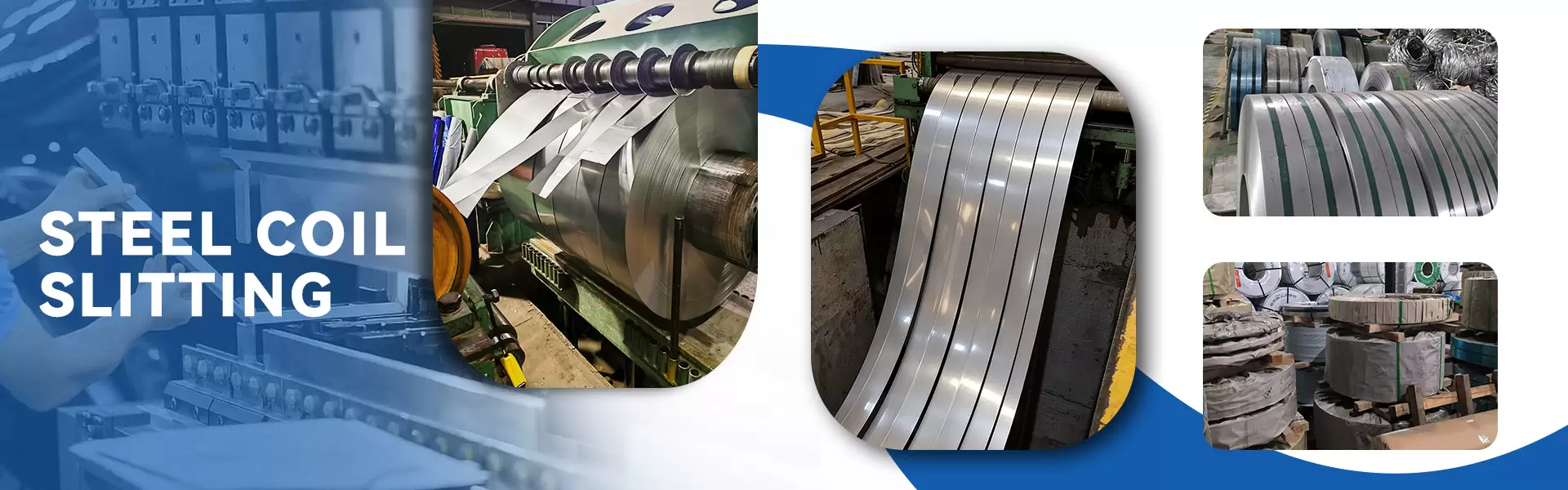
Slitting Process: Convert Coils into Precise Strips for Efficient Production
We provide professional slitting services for stainless steel coils and other metal materials, converting wide coils into narrow strips with accurate widths and stable edge quality. The process is widely used for stamping, roll forming, tube making, profiling, and various downstream fabrication applications—helping customers improve material utilization and production efficiency.
From material verification to slitting setup and final inspection, we focus on width tolerance, edge condition, coil stability, and surface protection throughout the process. Slitting can be customized according to your required strip width, thickness, coil ID, coil OD, and end-use application, helping reduce internal rework, improve consistency, and support faster delivery.
Key Processes & Quality Control Points
We standardize and record critical slitting parameters, including material grade confirmation, target strip width, tolerance control, edge burr inspection, recoiling stability, and protective packaging requirements. Each batch is processed with traceability, consistency, and usability in mind to ensure reliable downstream performance and delivery quality.
Width Accuracy & Edge Control
In-process checks and final inspection help ensure strip width consistency, controlled tolerances, and stable edge quality.
Coil Stability & Surface Protection
Recoiling control, separator protection, and packing solutions help maintain strip integrity and reduce surface damage during storage and transportation.
service related FAQ’s
Slitting is suitable for stainless steel, carbon steel, aluminum, and other coil materials. Common stainless steel grades such as 201, 304, 316, and 430 can all be processed depending on thickness and application requirements.
When properly controlled, slitting mainly changes the coil dimensions without affecting the core mechanical properties or corrosion resistance of the material.
Slitting is a processing method that cuts wide metal coils into narrower strips of specified widths. It improves material usability and provides strip products that are ready for further manufacturing processes.
Strip width accuracy is controlled through machine setup, tooling adjustment, tension management, and inspection during and after production. This helps ensure stable tolerances and batch consistency.
Slit coils are commonly used for stamping, roll forming, tube production, profiling, metal fabrication, and other downstream manufacturing applications that require narrower strip materials.