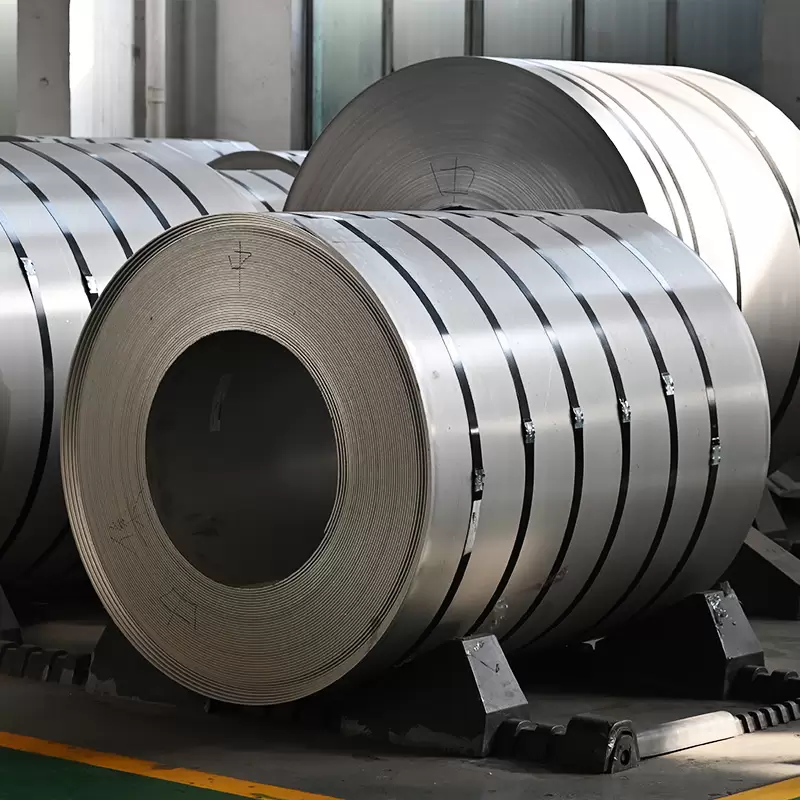
Stainless Steel Slitting Service: Tolerance, Burr, Coil Set, and RFQ Checklist
Stainless steel slitting service should not be bought from a grade name alone. The purchase order needs to explain the service condition, product form, processing route, inspection requirement, and acceptance standard.
A slitting order fails when width is the only requirement.
The buyer who writes those details early usually gets a cleaner quote. The buyer who leaves them open often receives several prices that look comparable but describe different jobs.
| Buyer question | Better direction | Risk if ignored |
|---|---|---|
| What is the service condition? | Specify width tolerance, burr direction, camber, coil set, coil ID, coil OD, surface protection, and packing. | The grade or form may be technically wrong |
| What does downstream processing need? | State drawing, tolerance, edge, finish, and packing | The material may arrive unusable for the next operation |
| What documents are required? | Name MTC, heat marking, inspection, and photos | Traceability becomes a dispute after delivery |
| What should not be assumed? | Do not approve a slitting quote that ignores edge quality and downstream feeding. | The supplier fills gaps with default practice |
What decision does stainless steel slitting service really require?
The buying judgement
The real decision is not whether stainless steel slitting service sounds stronger, cleaner, or more familiar. The real decision is whether it matches the environment and the work that happens after delivery.
Specify width tolerance, burr direction, camber, coil set, coil ID, coil OD, surface protection, and packing. That statement should appear in the buyer’s internal notes before the RFQ goes out. If the team cannot say why that direction fits, the quote request is not ready.
The RFQ control
A useful material decision has a failure mode attached to it. Corrosion, deformation, poor feeding, weld cracking, poor fit, and cosmetic rejection need different controls.
Which details change the quote fastest?
The buying judgement
Product form changes the quote first. Sheet, plate, coil, pipe, tube, bar, rod, and wire do not carry the same standards, tolerances, surface conditions, or packing methods.
Processing changes it next. Cutting, slitting, bending, welding, polishing, film protection, and length cutting turn a material quote into a production quote.
The RFQ control
For slit stainless coil, ask the supplier to quote the exact form, standard, size, tolerance, delivery condition, and processing scope. A cheap quote with missing scope is not a cheap shipment.
What should buyers ask before approving the supplier?
The buying judgement
Ask how the supplier will prove the material. The answer should include MTC availability, heat number marking, grade confirmation, dimensional checks, and photos before shipment when the order is processed.
Ask how the supplier will protect the surface and edges. Stainless and nickel alloy products often fail commercially before they fail metallurgically: scratches, dents, edge damage, moisture marks, and mixed labels create receiving problems.
The RFQ control
A serious supplier answers with documents, tolerances, and process limits. Adjectives do not help a buyer compare offers.
How should the RFQ be written?
The buying judgement
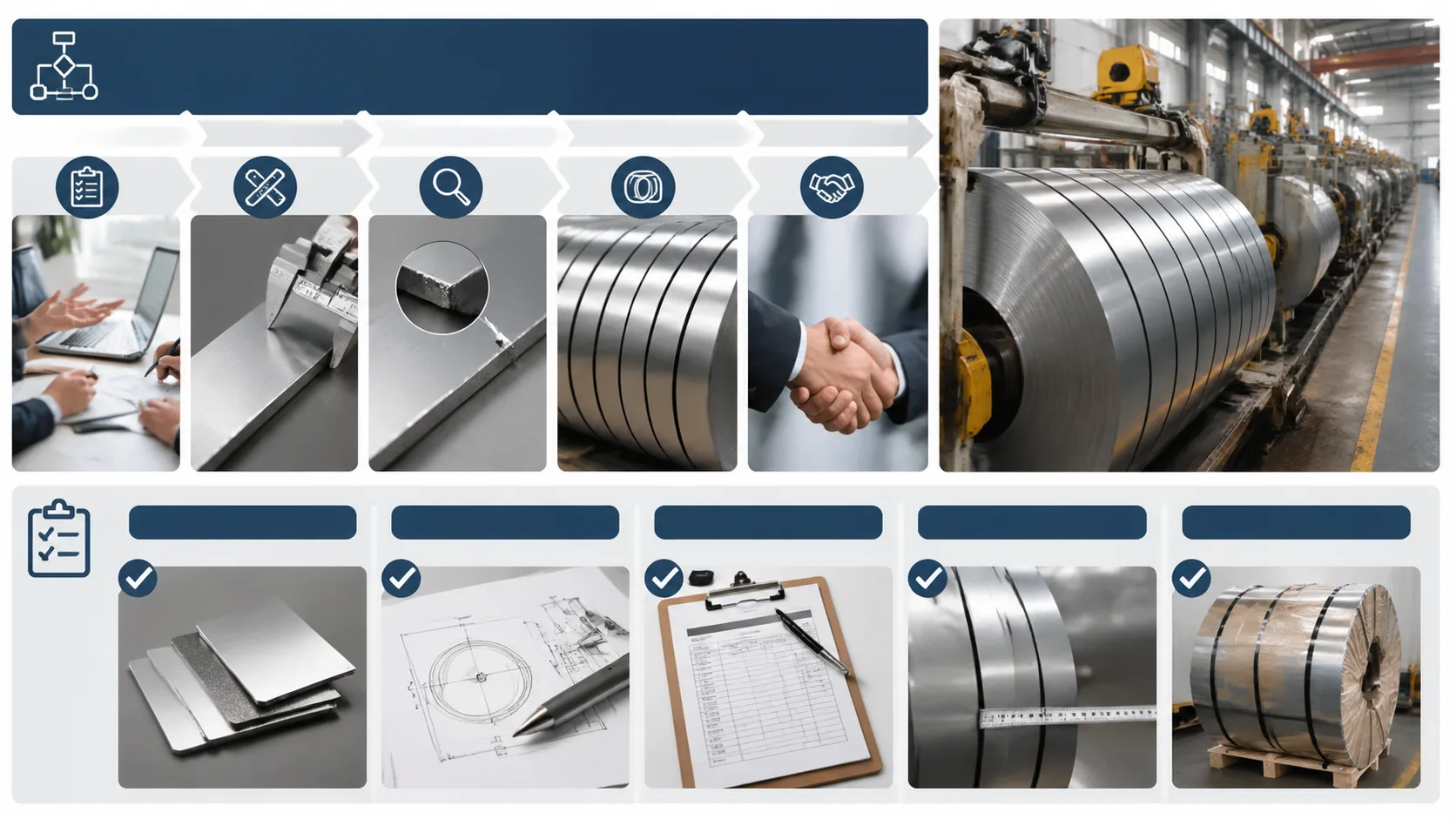
Write the RFQ in layers. First state the material and product form. Then state size, tolerance, finish, quantity, delivery condition, processing, inspection, packing, and documents.
If a drawing exists, attach it before price discussion. If there is no drawing, write the functional requirement: flow, pressure, forming, feeding, appearance, corrosion service, or assembly fit.
The RFQ control
NewQiujing can support slit stainless coil sourcing and processing more accurately when those details arrive together. That keeps the quote tied to the buyer’s actual use, not a generic stock description.
What mistakes should be caught before shipment?
The buying judgement
Check the label, heat number, MTC, dimensions, surface, edge condition, packing, and quantity before shipment. If the order includes processing, check sample photos or inspection records against the drawing.
Do not wait until arrival to discover that the coil ID is wrong, the edge has too much burr, the tube wall was quoted differently, or the finish was not protected.
The RFQ control
The last review should ask one blunt question: can this material go directly into the next operation? If the answer is no, the purchase is not finished.
How should competing supplier quotes be compared?
Normalize the scope first
Put every quote into the same scope before comparing price. The scope should include material form, standard, size tolerance, surface condition, processing, inspection, packing, and document requirements. If one quote includes cutting and another quote only covers raw material, the lower number is not evidence of a cheaper supplier.
Look for missing risk lines
The missing line item usually becomes the later argument. Common gaps include MTC format, heat number marking after cutting, surface protection, edge condition, dimensional inspection, packing photos, and third-party inspection. Ask suppliers to revise the quote instead of trying to remember verbal promises.
Treat lead time as a technical variable
Lead time is not only a logistics number. Fast shipment can mean standard stock, but it can also mean the supplier skipped processing, inspection, or packing details. Slow shipment can be reasonable when the order needs non-stock thickness, special finish, strict tolerance, or outside inspection. Compare usable delivery, not calendar days alone.
What should receiving inspection check?
Documents
Start with the documents because they are easier to correct before unloading than after production starts. Match the purchase order, invoice, packing list, MTC, grade, heat number, size, quantity, and any inspection report. If the heat number on the material does not match the MTC, stop the material before it enters production.
Dimensions and surface
Check size, thickness, wall, width, length, straightness, flatness, edge condition, and surface finish against the RFQ. For processed material, check the drawing revision too. A small dimensional mismatch can create more cost than a visible surface defect because it may not be found until the next operation.
Packing and handling damage
Inspect packing before removing it. Water marks, broken straps, crushed edges, torn film, and mixed labels tell the buyer how the shipment was handled. Take photos while the material is still packed. That evidence is much stronger than a complaint written after parts have been moved around the shop.
What should the buyer check before sending the PO?
A final RFQ check should be boring. That is the point. If the grade, form, standard, tolerance, finish, processing scope, inspection, marking, and packing are all named, the supplier has less room to guess.
| RFQ line | What it prevents |
|---|---|
| Service condition | Wrong grade or alloy family |
| Product form and standard | Non-comparable supplier quotes |
| Tolerance and finish | Fit, feeding, or appearance problems |
| Processing scope | Late cost additions |
| MTC and heat marking | Traceability gaps |
| Packing photos | Receiving damage disputes |
The buyer should also keep one internal note that explains why the selected grade or form is acceptable for the service. That note does not need to be long. It only needs to name the exposure, the part function, and the failure mode being avoided.
For repeat orders, keep the approved wording as a purchasing template. That prevents a future buyer from shortening the RFQ back to a grade name and quantity, which is how many avoidable material disputes return six months later.
Conclusion
Stainless Steel Slitting Service: Tolerance, Burr, Coil Set, and RFQ Checklist is a purchasing control problem as much as a material question. A slitting order fails when width is the only requirement. The safest next step is to write the RFQ around service condition, product form, processing, inspection, and packing. Once those points are fixed, price comparison becomes useful. Before that, the buyer is only comparing incomplete promises.
Author: NewQiujing Group