ASTM A240 vs A276 Stainless Steel: Which Standard Applies to Your Project?
I’ve lost count of how many times I’ve seen a procurement manager order stainless steel bars citing ASTM A240 — or request plates under ASTM A276. The result? A rejected shipment, a delayed project, and an expensive lesson in reading the fine print of ASTM standards.
If you work with stainless steel in any engineering or procurement capacity, understanding the difference between ASTM A240 and ASTM A276 isn’t optional. It’s the baseline knowledge that prevents costly mistakes in material specification, purchase orders, and code compliance.
This guide breaks down exactly what each standard covers, where they overlap, where they diverge, and — most importantly — which one belongs on your purchase order.
Why This Confusion Costs Money in Procurement
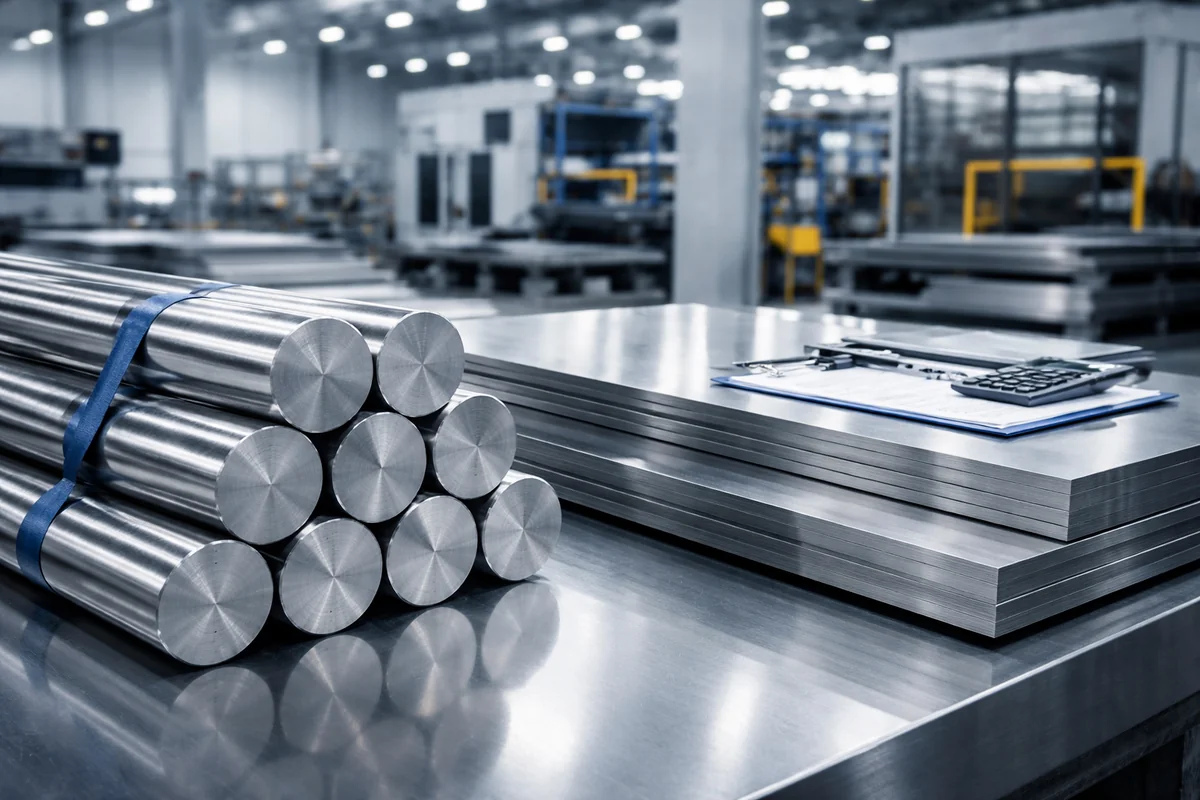
Here’s a scenario I’ve seen play out more than once: a pressure vessel fabricator needs 304L stainless steel for both the shell plates and the support nozzle bars. The procurement team writes a single spec — “304L per ASTM A240” — and sends it to the mill. The plates arrive fine. The bars get rejected at the receiving inspection because the mill test certificate cites A276, not A240, and the chemical composition limits don’t match what the inspector expected.
The root cause wasn’t a quality issue. It was a specification issue. The buyer assumed one standard covered everything. It doesn’t.
ASTM A240 and A276 are complementary standards that cover different product forms of the same stainless steel grades. They share many of the same grades — 304, 316, 410, 2205 — but they apply to different physical forms, have subtly different chemical composition limits, and carry different implications for ASME code compliance. Mixing them up doesn’t just create paperwork headaches; it can mean non-compliance with pressure vessel codes and potential liability.
ASTM A240: The Flat Product Standard Explained
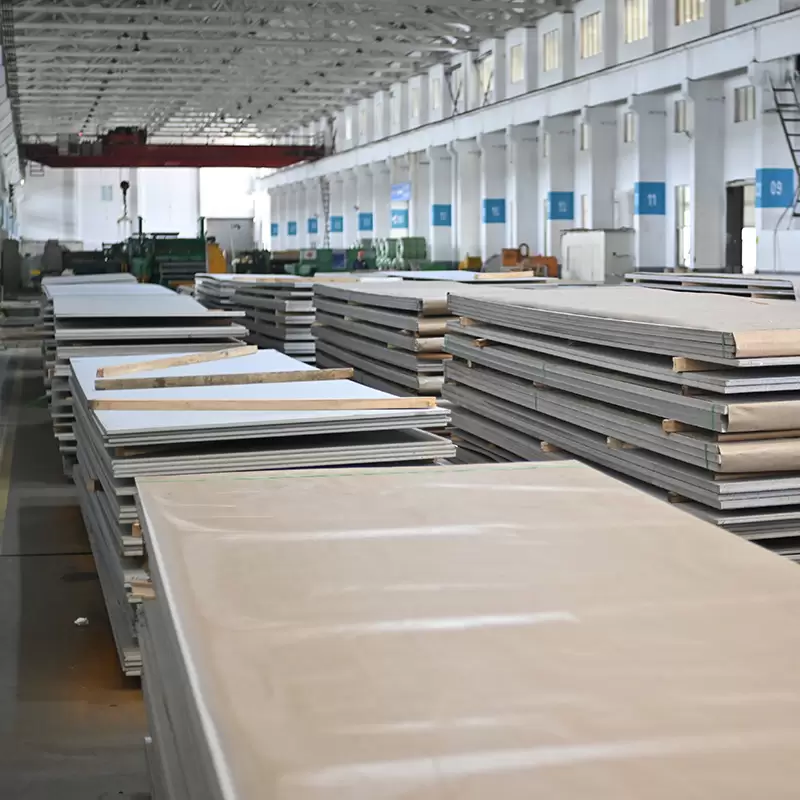
ASTM A240 — formally titled “Standard Specification for Chromium and Chromium-Nickel Stainless Steel Plate, Sheet, and Strip for Pressure Vessels and for General Applications” — is the governing standard for flat-rolled stainless steel products.
What It Covers
A240 applies to three product forms:
- Plate: Thickness of 3.0 mm (0.125 in) and above. Used for pressure vessel shells, tank walls, structural plates, and heavy equipment housings.
- Sheet: Thickness between 0.15 mm and 3.0 mm. Used for cladding, decorative panels, equipment enclosures, and light structural applications.
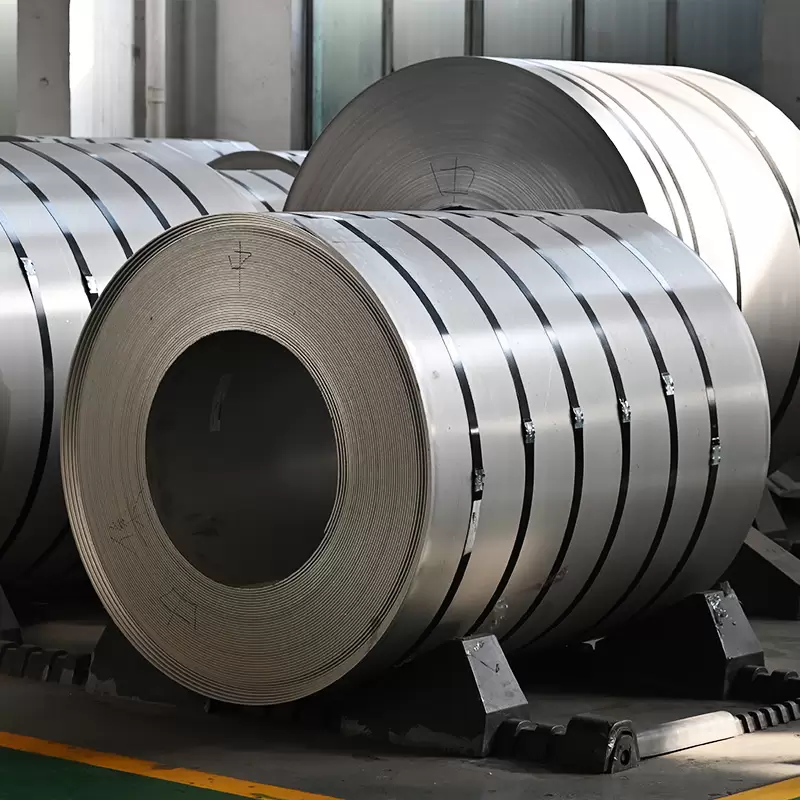
- Strip: Narrow-width flat product, typically supplied in coils. Used for stamped components, bimetallic strips, and precision-formed parts.
Who Specifies A240
If you’re building a pressure vessel, a storage tank, a heat exchanger shell, or any equipment where the primary material is flat-rolled stainless steel, A240 is your standard. It’s also the default specification for architectural panels, food processing equipment surfaces, and general industrial applications involving plate or sheet.
Key Requirements
A240 specifies:
- Chemical composition limits for each grade (with tolerances that vary by product thickness)
- Mechanical properties including tensile strength, yield strength, elongation, and hardness
- Heat treatment conditions (solution annealed, stress relieved, etc.)
- Surface finish designations (2B, BA, No. 4, No. 8, etc.)
- Dimensional tolerances for thickness, width, and length
- Testing and certification requirements including mill test reports (MTR)
One important nuance: A240 chemical composition limits can vary depending on the product thickness. For example, the allowable carbon content for Type 304 may differ between a 6 mm plate and a 1.5 mm sheet. This matters when you’re comparing MTR data against specification limits.
ASTM A276: The Bar and Shape Standard Explained
ASTM A276 — “Standard Specification for Stainless Steel Bars and Shapes” — covers the long products that A240 doesn’t touch.
What It Covers
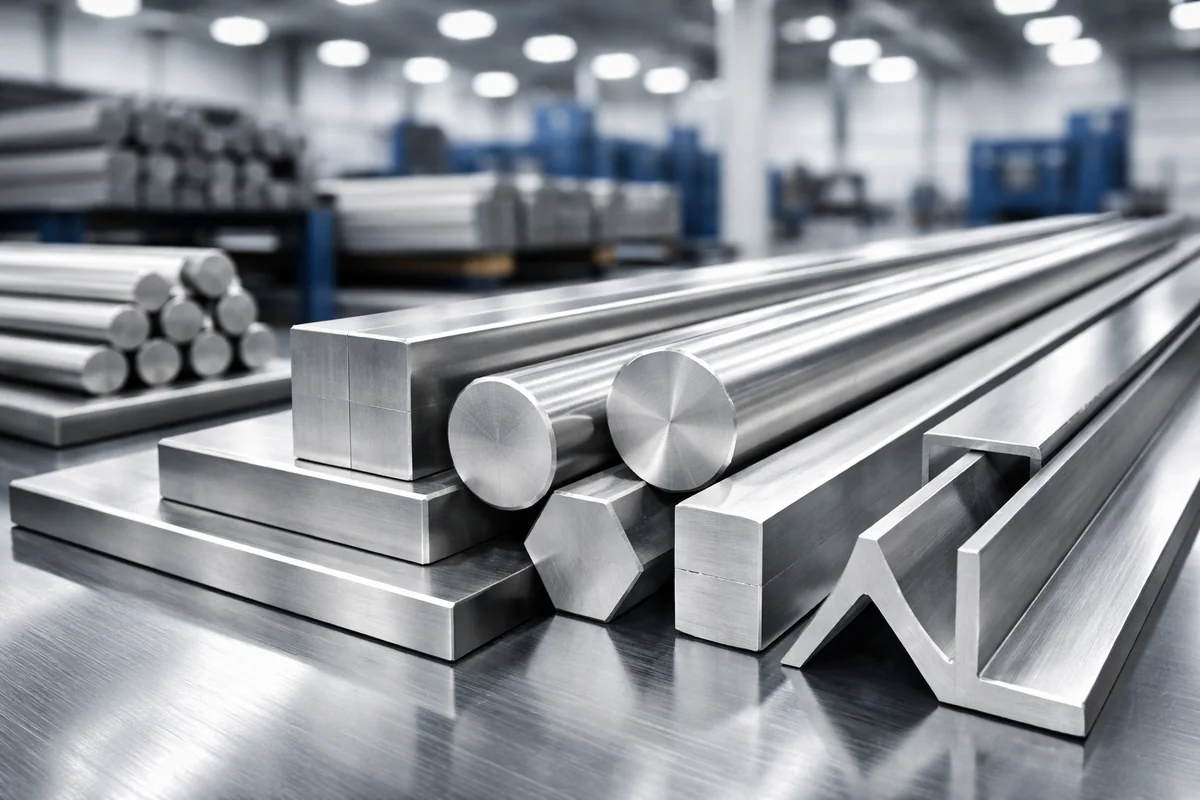
A276 applies to:
- Round bars: The most common form — used for shafts, fasteners, valve stems, and machined components.
- Hex bars: Used for bolt stock and hexagonal machined parts.
- Square bars: Used for structural supports, brackets, and custom fabricated components.
- Flat bars: Used for structural bracing, brackets, and welded assemblies.
- Shapes: Angles, channels, and other structural profiles in stainless steel.
Finish Conditions
A276 covers two primary finish conditions:
- Hot-finished: Produced by hot rolling at elevated temperatures. Rougher surface finish, lower cost, suitable for structural applications and heavy machining.
- Cold-finished: Produced by cold drawing or cold rolling after hot finishing. Better surface finish, tighter dimensional tolerances, higher strength — used for precision machined parts, fasteners, and applications where surface quality matters.
Who Specifies A276
If your stainless steel component is a bar, rod, wire, or shape — regardless of whether it’s going into a pressure vessel, a building structure, a machine part, or a fastener — A276 is the standard that governs it.
Key Requirements
A276 specifies:
- Chemical composition limits for each grade (which may differ slightly from A240 for the same grade)
- Mechanical properties — tensile, yield, elongation, hardness — with separate requirements for hot-finished and cold-finished conditions
- Dimensional tolerances for each product form
- Condition requirements (annealed, solution treated, etc.)
- Testing and certification requirements
Side-by-Side: Key Differences That Matter in Practice
The confusion between A240 and A276 usually comes down to three areas: what they cover, how they define chemical composition, and what testing they require.
Product Form Coverage
| Aspect | ASTM A240 | ASTM A276 |
|---|---|---|
| Plates | Yes | No |
| Sheets | Yes | No |
| Strips | Yes | No |
| Round bars | No | Yes |
| Hex bars | No | Yes |
| Square bars | No | Yes |
| Flat bars | No | Yes |
| Shapes (angles, channels) | No | Yes |
This is the most straightforward distinction. If it’s flat and wide, it’s A240. If it’s long and has a cross-section, it’s A276.
Chemical Composition: Same Grades, Different Limits
Here’s where it gets tricky. Both A240 and A276 cover grade 304, grade 316, grade 410, and many other common grades. But the chemical composition limits are not always identical.
For grade 304 (UNS S30400), the key differences:
| Element | A240 (Plate/Sheet) | A276 (Bar) |
|---|---|---|
| Carbon (max) | 0.08% | 0.08% |
| Chromium | 18.0–20.0% | 18.0–20.0% |
| Nickel | 8.0–10.5% | 8.0–10.5% |
| Manganese (max) | 2.00% | 2.00% |
| Phosphorus (max) | 0.045% | 0.045% |
| Sulfur (max) | 0.030% | 0.030% |
For 304, the limits are essentially the same. But for other grades, differences emerge. Grade 316L, for example, has slightly different phosphorus and sulfur limits depending on whether it’s specified under A240 or A276. And for duplex grades like 2205, the nitrogen content ranges can differ between the two standards.
The practical impact: if your quality plan requires verification against specific composition limits, you must reference the correct standard. A mill test certificate for A276 bars showing 0.031% sulfur would pass A276 but fail A240’s 0.030% maximum for the same grade.
Mechanical Testing Differences
A240 and A276 have different testing philosophies reflecting their different product forms:
- A240 requires testing per heat and per lot, with specific requirements for transverse and longitudinal test directions on plates and sheets.
- A276 testing requirements differ between hot-finished and cold-finished bars, with additional requirements for size ranges (e.g., bars over a certain diameter may have different elongation requirements).
Neither standard requires Charpy impact testing by default, but A240 allows it as a supplementary requirement for applications where toughness is critical.
The ASME Code Connection: SA-240 and SA-276
If you’re building pressure vessels or boilers, the ASTM standards have ASME equivalents that carry the “SA” prefix instead of “A”:
- SA-240 = ASME adoption of ASTM A240
- SA-276 = ASME adoption of ASTM A276
The SA and A versions are technically identical in content. The distinction matters for code compliance:
SA-240 is mandatory for pressure vessel plates, sheets, and strips under ASME Section VIII. If you’re specifying material for a pressure vessel shell, the MTR must cite SA-240 (or A240 with the ASME U-stamp).
SA-276 is optional for bar components in pressure vessels. ASME Section VIII allows A276 bars without the SA- prefix for non-pressure-retaining components like supports, brackets, and structural attachments. However, for nozzle forgings and other pressure-boundary bars, many engineers specify SA-276 for consistency and to simplify the inspection narrative.
The key takeaway: if your project falls under ASME code, check whether your specific application requires the SA- version. For plates in pressure vessels, it’s mandatory. For bars, it’s a judgment call based on the component’s role in the pressure boundary.
When You Need Both Standards on the Same Project
Most real-world projects don’t use just one product form. A typical pressure vessel project might include:
- Shell and head plates: A240 (SA-240)
- Nozzle forgings: A182 (forging standard) or A276 (bar stock for machined nozzles)
- Support saddles and skirt: A276 bars or A36 carbon steel
- Internal baffles and trays: A240 sheets
- Bolting: A479 (the bar standard specifically for bolting)
Managing multiple standards on a single project requires disciplined procurement practices:
- Separate line items on the purchase order for each standard. Don’t combine A240 plates and A276 bars under a single specification line.
- Separate MTRs — each material form will have its own mill test certificate citing the applicable standard.
- Unified quality plan that references the correct standard for each material form during incoming inspection.
- Consistent grade designation — make sure “304L” means the same thing regardless of whether it’s on an A240 plate or an A276 bar. The UNS number (S30403) is the most reliable way to ensure consistency.
Common Procurement Mistakes and How to Avoid Them
Mistake 1: Specifying A276 for a Plate Order
This happens when someone sees “304 stainless steel” and grabs the first standard that comes to mind. If you order plates under A276, the mill may refuse the order or — worse — ship material tested to A276 limits, which may not meet your A240 requirements.
Fix: Always match the standard to the product form. Plates, sheets, strips → A240. Bars, shapes → A276.
Mistake 2: Using A240 Composition Limits When Inspecting A276 Bars
I’ve seen quality inspectors pull up the A240 composition table and reject A276 bars that were perfectly within A276 limits but slightly outside A240 limits for the same grade.
Fix: Your inspection plan must reference the correct standard. Keep both standards accessible in your quality documentation.
Mistake 3: Forgetting the ASME SA- Prefix
If your pressure vessel design specifies “A240 Grade 304” but the ASME inspector expects “SA-240 Grade 304,” you may face a code compliance issue during the final inspection.
Fix: For ASME-coded equipment, always specify SA-240 for plates and SA-479 for bolting. For bars that aren’t pressure-boundary components, A276 is usually acceptable without the SA- prefix.
Mistake 4: Not Checking the Revision Year
ASTM standards are updated regularly. The 2025 revision of A240 introduced tighter chemical composition tolerances for grades 304, 316, and 2205. If your project specification references an older revision, you may be accepting material that doesn’t meet current requirements — or rejecting material that does.
Fix: Always reference the latest revision unless the project specification explicitly calls out a specific year. Include the revision year in your purchase order: “ASTM A240/A240M-25” rather than just “ASTM A240.”
Quick Decision Guide: Which Standard Goes on Your PO
Use this decision process when specifying stainless steel:
Step 1: Identify the product form.
- Plate, sheet, or strip → proceed to Step 2A
- Bar (round, hex, square, flat) or shape → proceed to Step 2B
Step 2A (Flat products): Specify ASTM A240.
- Is this for a pressure vessel or ASME-coded equipment? → Use SA-240
- Is this for general applications? → A240 is sufficient
- Include the grade, condition, finish, and dimensions
Step 2B (Long products): Specify ASTM A276.
- Is this for bolting? → Consider ASTM A479 instead (stricter requirements for bolting applications)
- Is this for a pressure vessel nozzle or pressure-boundary component? → Consider SA-276
- Is this for structural supports, brackets, or general machining? → A276 is sufficient
- Include the grade, condition (hot-finished or cold-finished), and dimensions
Step 3: Verify consistency.
- Check that the grade you specified is actually available in the product form under the chosen standard
- Confirm the UNS number matches across all material forms on the project
- Ensure your quality plan references the correct standard for each material type
EN/ISO Equivalents: Bridging International Standards
If you source stainless steel from international mills — and most procurement managers do — you’ll encounter European and international standards that correspond to ASTM A240 and A276.
Flat Products (A240 Equivalents)
The European equivalent of ASTM A240 is EN 10088-2 (for plates, sheets, and strips). The key differences:
| Aspect | ASTM A240 | EN 10088-2 |
|---|---|---|
| Grade designation | AISI/UNS (e.g., 304, S30400) | EN number (e.g., 1.4301) |
| Chemical composition | Specified ranges | Specified ranges (slightly different in some elements) |
| Mechanical properties | Tensile, yield, elongation | Tensile, yield, elongation, plus Charpy impact for some grades |
| Surface finish | Designated by number (2B, BA, No. 4) | Designated by finish code |
| Testing certification | MTR per EN 10204 Type 3.1 | MTR per EN 10204 Type 3.1 |
For international projects, you may need to reference both standards on the same purchase order: “Material shall comply with ASTM A240/A240M Grade 304/304L, equivalent to EN 10088-2 Grade 1.4307.”
Long Products (A276 Equivalents)
The European equivalent of ASTM A276 is EN 10088-3 (for bars and bright products). Similar to the flat product standards, the grade designations differ but the material properties are broadly equivalent.
One important note for international procurement: EN 10088-3 includes additional requirements for certain grades that A276 does not, such as mandatory Charpy impact testing for some austenitic grades at sub-zero temperatures. If your project specification requires compliance with both ASTM and EN standards, verify that the material meets the more stringent requirement.
How to Read a Mill Test Certificate for A240 and A276 Materials
The mill test certificate (MTR) is your proof that the material meets the specified standard. Understanding what to look for on an MTR — and what the differences mean between A240 and A276 certificates — is essential for incoming inspection.
Key Fields to Verify
Standard cited: Confirm the MTR references the correct standard (A240 or A276) and the current revision year. A certificate citing “ASTM A240” without a year may refer to any revision.
Grade and UNS number: The grade (e.g., 304L) and UNS number (e.g., S30403) should both be present. If there’s a discrepancy between the two, the UNS number takes precedence.
Chemical composition: Each element should fall within the limits specified by the applicable standard. Remember that A240 and A276 may have different limits for the same grade — verify against the correct standard.
Mechanical properties: Tensile strength, yield strength, and elongation should meet the minimum requirements. For A276 bars, confirm the test results correspond to the correct condition (hot-finished or cold-finished).
Heat treatment: Should specify the type (solution annealed, stress relieved, etc.) and, where applicable, the temperature and time. For A240 plates, this is typically solution annealed at 1040°C minimum. For A276 bars, the heat treatment depends on the condition specified.
Dimensional data: Thickness (for A240) or diameter (for A276) should be within the tolerance limits of the specified standard.
Red Flags on an MTR
- Standard cited doesn’t match the purchase order
- Chemical composition elements missing or showing “ND” (not determined)
- Mechanical properties below minimum requirements
- No heat treatment information
- Certificate not signed or lacking the testing organization’s stamp
- Revision year older than what your project specification requires
Getting the standard right on the purchase order is the first line of defense against material non-conformance. It takes an extra two minutes to verify — and saves weeks of delays when the material arrives at your facility.
Whether you’re ordering 304 vs 316 stainless steel for a food processing plant or specifying duplex plates for a coastal construction project, the same principle applies: match the standard to the product form, and never assume one standard covers everything.
Author: NewQiujing Group