Inconel 625 vs Hastelloy C-276 for Chemical Processing: A Metallurgist’s Decision Framework
A chemical plant in Louisiana replaced its reactor tubes with Inconel 625 after the original Hastelloy C-276 tubes failed prematurely. Sixteen months later, the new tubes were leaking too — not because Inconel 625 was the wrong alloy, but because the process stream contained wet hydrochloric acid vapor, an environment where Hastelloy C-276 would have lasted five times longer.
The material selection wasn’t wrong. The analysis behind it was.
When chemical process engineers choose between Inconel 625 and Hastelloy C-276, they’re choosing between two of the most capable nickel alloys available. Both handle environments that would destroy stainless steel in days. But they’re optimized for different chemical conditions, and picking the wrong one doesn’t just cost money — it can shut down a production line.
This guide gives you the framework to make the right call, based on the actual chemistry of your process, not marketing materials or habit.
Why This Comparison Matters in Chemical Processing
Chemical processing environments are uniquely demanding. You’re dealing with combinations of high temperature, aggressive media, pressure, and sometimes all three simultaneously. The consequences of wrong material selection are severe:
- Premature corrosion failure leading to unplanned shutdowns ($50,000–$500,000 per day in lost production)
- Product contamination from corrosion products leaching into process streams
- Safety incidents from containment breaches in corrosive service
- Wasted capital from replacing equipment years ahead of schedule
Inconel 625 and Hastelloy C-276 are the two most frequently shortlisted alloys for severe chemical service. They have similar nickel content (roughly 58–61%), which leads many engineers to assume they’re interchangeable. They’re not. The differences in their chromium, molybdenum, and niobium content create fundamentally different corrosion resistance profiles.
Understanding these differences is especially critical if you’re also evaluating materials for adjacent applications like nickel alloy hydrogen storage systems or high-temperature reactor components.
Composition and What It Means for Corrosion Resistance
The composition difference between these two alloys tells you almost everything about where each one excels.
| Element | Inconel 625 (UNS N06625) | Hastelloy C-276 (UNS N10276) |
|---|---|---|
| Nickel | 58.0 min | Balance (≈57–61) |
| Chromium | 20.0–23.0 | 14.5–16.5 |
| Molybdenum | 8.0–10.0 | 15.0–17.0 |
| Iron | 5.0 max | 4.0–7.0 |
| Niobium/Tantalum | 3.15–4.15 | — |
| Tungsten | — | 3.0–4.5 |
| Carbon | 0.10 max | 0.01 max |
| Manganese | 0.50 max | 1.0 max |
Three compositional differences drive performance:
Chromium: Inconel 625 has 20–23% Cr vs C-276’s 14.5–16.5%. Higher chromium means better resistance to oxidizing environments — nitric acid, ferric chloride, wet chlorine. Chromium forms the passive Cr₂O₃ film that protects the alloy surface.
Molybdenum: Hastelloy C-276 has 15–17% Mo vs Inconel 625’s 8–10%. Molybdenum is the key element for resisting reducing acids — hydrochloric acid, sulfuric acid, phosphoric acid. It also dramatically improves resistance to pitting and crevice corrosion in chloride environments.
Niobium and Tungsten: Inconel 625 uses niobium for stabilization and strengthening. Hastelloy C-276 uses tungsten, which enhances its resistance to certain acid mixtures, particularly sulfuric-hydrochloric acid blends.
The bottom line: Inconel 625 is a chromium-dominant alloy (oxidizing environments), while Hastelloy C-276 is a molybdenum-dominant alloy (reducing environments).
Performance in Specific Chemical Environments
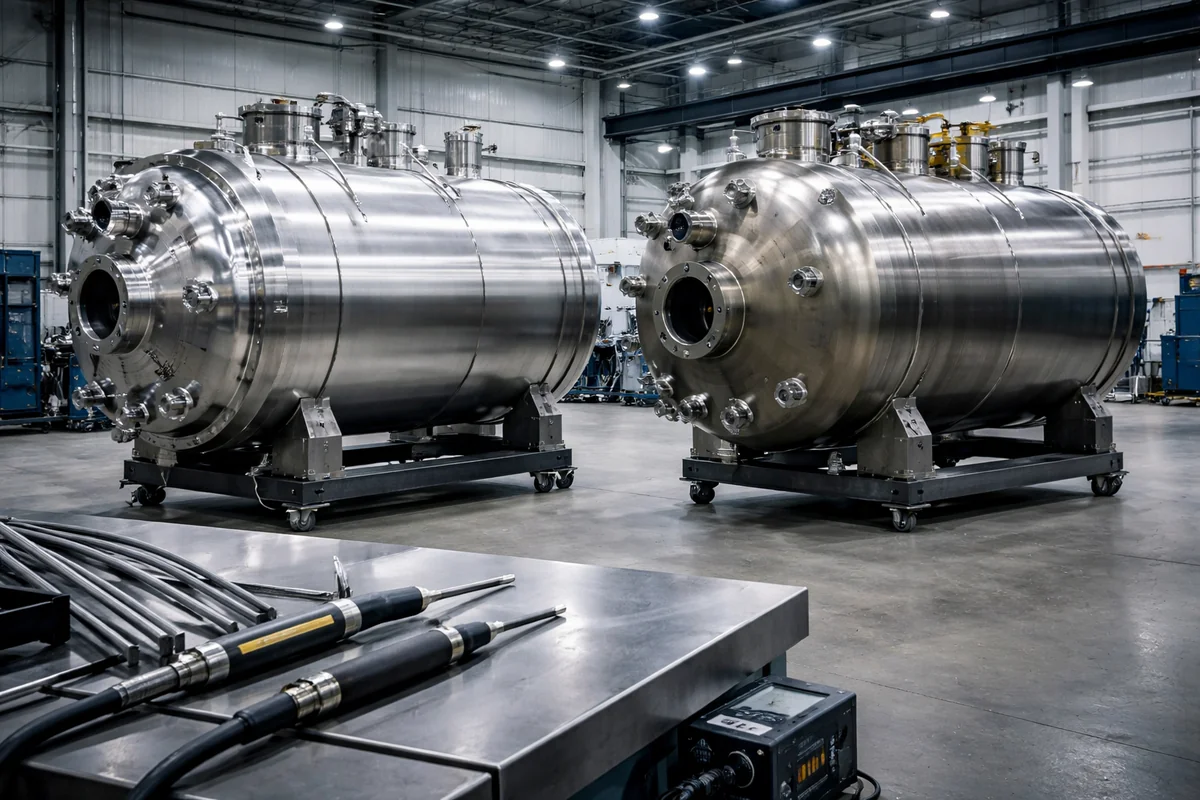
This is the section that separates real engineering analysis from marketing comparison. The right alloy depends on the specific chemicals, concentrations, temperatures, and contaminants in your process stream.
Sulfuric Acid (H₂SO₄)
Hastelloy C-276 is significantly better in sulfuric acid across most concentrations and temperatures. At 50% concentration and 80°C, C-276 shows corrosion rates below 0.1 mm/year while Inconel 625 may exceed 1.0 mm/year. C-276 handles sulfuric acid up to about 70% concentration at elevated temperatures; Inconel 625 is limited to dilute sulfuric acid (below ~15%) at moderate temperatures.
Winner: Hastelloy C-276
Hydrochloric Acid (HCl)
This is where the difference is most dramatic. Hastelloy C-276 is one of the few alloys that handles hydrochloric acid at full concentration and moderate temperatures. Inconel 625 has limited HCl resistance and should not be used in concentrated hydrochloric acid service.
At 10% HCl and 60°C, C-276 corrosion rate is typically below 0.05 mm/year. Inconel 625 at the same conditions may corrode at 2–5 mm/year — fast enough to cause failure within months.
Winner: Hastelloy C-276 (decisively)
Wet Chlorine and Chloride Solutions
Inconel 625 performs well in wet chlorine and chloride-bearing oxidizing environments due to its higher chromium content. It’s widely used in marine environments, chlorine dioxide generators, and hypochlorite systems.
Hastelloy C-276 also handles chlorides well, but its advantage is primarily in chloride environments that also contain reducing acids. For pure chloride/oxidizing chloride service, Inconel 625 is often the better choice.
Winner: Inconel 625 (for oxidizing chloride environments)
Phosphoric Acid (H₃PO₄)
Both alloys perform well in phosphoric acid across most concentrations. Hastelloy C-276 has a slight edge at higher temperatures and concentrations, particularly when fluoride contaminants are present (common in wet-process phosphoric acid).
Winner: Hastelloy C-276 (slight edge)
Mixed Acid Environments
Real chemical processes rarely involve a single pure acid. Mixed acid streams — sulfuric + hydrochloric, nitric + hydrochloric (aqua regia), sulfuric + nitric — are where Hastelloy C-276’s molybdenum-tungsten combination really shines. Its ability to handle mixed reducing and oxidizing conditions simultaneously is unmatched among commercial alloys.
Inconel 625 can handle some mixed acid environments, particularly those dominated by oxidizing components, but it struggles in mixed reducing acid streams.
Winner: Hastelloy C-276
Caustic (NaOH, KOH)
Both alloys handle caustic soda and caustic potash well at moderate temperatures. Inconel 625 has a slight advantage at higher concentrations and temperatures (above 100°C) due to its niobium stabilization.
Winner: Inconel 625 (slight edge at high temperature)
Organic Acids and Solvents
Both alloys perform excellently in most organic acid environments — acetic acid, formic acid, oxalic acid, and most organic solvents. Neither alloy is typically the limiting factor in organic chemical service.
Winner: Tie
High-Temperature Chemical Processing: Where Inconel 625 Pulls Ahead
Temperature changes the equation. Above approximately 400°C, Inconel 625’s mechanical properties become a significant advantage.
Creep Strength
Inconel 625 maintains useful creep strength up to about 750°C (1380°F). Its niobium and molybdenum content provide solid-solution strengthening that resists deformation under sustained load at high temperatures.
Hastelloy C-276 has good elevated temperature strength but its creep resistance starts to decline above about 550°C (1020°F). The higher molybdenum content that gives C-276 its acid resistance doesn’t translate to proportional high-temperature strength gains.
For reactor tubes, furnace components, and high-temperature heat exchangers operating above 500°C, Inconel 625 is generally the better choice from a mechanical integrity standpoint.
Oxidation Resistance
At high temperatures, oxidation resistance becomes critical. Inconel 625’s higher chromium content provides a more stable protective oxide layer at elevated temperatures. In cyclic oxidation testing (thermal cycling between high and low temperatures), Inconel 625 consistently outperforms Hastelloy C-276.
Hastelloy C-276 can develop volatile molybdenum oxides at temperatures above about 650°C in oxidizing atmospheres, which accelerates material loss.
For high-temperature oxidizing environments: Inconel 625
Carburization and Nitriding
In petrochemical reformer tubes and ammonia synthesis equipment, carburization and nitriding are common degradation mechanisms. Inconel 625’s higher chromium content provides better resistance to carbon and nitrogen ingress at high temperatures.
Weldability and Fabrication for Chemical Equipment
Chemical equipment often requires extensive welding — field welds, repair welds, and complex fabrication sequences. The weldability difference between these alloys is significant and often the deciding factor.
Inconel 625: Excellent Weldability
Inconel 625 is one of the most weldable nickel alloys available. Key advantages:
- No post-weld heat treatment required in most applications
- Matching filler metal (ERNiCrMo-3 / Alloy 625 filler) readily available
- Wide welding parameter window — tolerant of minor parameter variations
- Low hot cracking susceptibility due to niobium stabilization
- Can be welded using GTAW (TIG), GMAW (MIG), SMAW (stick), and SAW (submerged arc)
This weldability is a major reason Inconel 625 is preferred for field fabrication and complex assemblies where post-weld heat treatment is impractical.
Hastelloy C-276: Good but Demanding
Hastelloy C-276 is weldable but requires more careful control:
- Matching filler metal (ERNiCrMo-4 / Alloy C-276 filler) available
- Post-weld heat treatment often recommended for maximum corrosion resistance in the as-welded condition, the heat-affected zone can show reduced corrosion resistance
- Narrower welding parameter window — more sensitive to heat input and interpass temperature
- Must use low heat input to avoid precipitation of deleterious phases (mu phase, P phase) that reduce corrosion resistance
- Weld cleaning is critical — any residual flux or contamination will create localized corrosion sites
For chemical equipment that will operate in severe corrosive environments, the weld quality requirements for C-276 are more stringent. This means more experienced welders, more careful procedure qualification, and more rigorous inspection.
Practical Impact on Fabrication Cost
Inconel 625 fabrication typically costs 15–25% less than Hastelloy C-276 fabrication for equivalent complexity, primarily because:
- Lower welder qualification requirements
- No post-weld heat treatment in most cases
- More forgiving welding procedures
- Less stringent weld cleaning requirements
However, this cost advantage can be erased if the application demands C-276’s superior corrosion resistance — a cheaper weld that fails in service is never actually cheaper.
Decision Matrix: Choosing the Right Alloy for Your Process
Use this framework to make the selection decision:
| Decision Factor | Choose Inconel 625 | Choose Hastelloy C-276 |
|---|---|---|
| Primary environment | Oxidizing acids, neutral chlorides, caustic | Reducing acids, mixed acids, HCl |
| Temperature range | Above 400°C preferred | Below 550°C optimal |
| Chloride pitting concern | Moderate | Severe (crevice corrosion) |
| Fabrication complexity | Complex, field-welded | Simple, shop-fabricated |
| HCl presence | Not recommended | Excellent |
| H₂SO₄ concentration | Dilute (<15%) | Up to 70% |
| Oxidizing agents (HNO₃, FeCl₃) | Excellent | Good |
| Budget priority | Lower fabrication cost acceptable | Performance justifies premium |
| Post-weld heat treatment | Not required | Recommended for max performance |
Quick rule of thumb: If your process stream is primarily oxidizing or neutral, Inconel 625 is likely the better choice. If it contains reducing acids, hydrochloric acid, or mixed acid conditions, Hastelloy C-276 is almost always superior.
Cost of Ownership: Beyond the Per-Kilogram Price
Hastelloy C-276 typically costs 20–30% more per kilogram than Inconel 625. But the per-kilogram price is a poor basis for material selection in chemical processing.
Total Cost Framework
Material cost = weight × price per kg (C-276 is higher)
Fabrication cost = welding + forming + heat treatment + inspection (C-276 is higher)
Replacement frequency = how often the component needs replacement (C-276 lasts longer in reducing acid service)
Downtime cost = production loss during replacement (same for both, but fewer replacements = less total downtime)
Maintenance cost = ongoing inspection, repair, and monitoring (C-276 may require less monitoring in its optimal environments)
Example: Sulfuric Acid Heat Exchanger
A sulfuric acid cooler operating at 40% concentration and 90°C:
- Inconel 625: Expected service life 3–5 years. Replacement cost (material + fabrication + downtime) ≈ $180,000 per cycle.
- Hastelloy C-276: Expected service life 12–15 years. Higher initial cost ≈ $220,000.
Over a 15-year plant life:
- Inconel 625: 3–4 replacements = $540,000–$720,000 total
- Hastelloy C-276: 1 replacement = $220,000 total
The “more expensive” alloy costs less than half over the equipment lifetime.
Sourcing and Quality Verification
Both alloys require careful sourcing and verification, but there are differences in what to watch for.
Mill Test Certificate Review
For both alloys, verify:
- Nickel, chromium, molybdenum content against the applicable ASTM specification (B443 for Inconel 625, B575 for Hastelloy C-276)
- Mechanical properties (tensile, yield, elongation)
- Heat treatment condition and records
- Intergranular corrosion test results (where applicable)
For Hastelloy C-276 specifically, pay extra attention to:
- Molybdenum content — should be 15.0–17.0%. Molybdenum segregation is a known issue with high-Mo alloys.
- Carbon content — must be very low (0.01% max). Higher carbon leads to carbide precipitation and reduced corrosion resistance.
- Grain size — affects both mechanical properties and corrosion resistance.
Common Quality Issues
Inconel 625: Generally reliable from most qualified mills. Watch for niobium segregation in thick sections and verify heat treatment records for heavy forgings.
Hastelloy C-276: More sensitive to processing quality. Common issues include:
- Molybdenum banding (segregation visible as compositional variation across the cross-section)
- Incomplete solution annealing (leaves deleterious phases that reduce corrosion resistance)
- Surface contamination from processing (iron pickup during hot working)
For critical chemical processing applications, consider specifying additional testing: ferrite content measurement, corrosion testing per ASTM G48, or intergranular corrosion testing per ASTM A262.
Clad and Bimetal Options: When You Can’t Afford All-Hastelloy
For large equipment where Hastelloy C-276’s corrosion resistance is needed but the budget can’t support solid alloy construction, clad and bimetal options deserve consideration.
Weld-Overlay Cladding
A carbon steel or low-alloy steel base can be overlaid with Hastelloy C-276 using weld-overlay processes (plasma transferred arc, hot wire TIG, or explosion bonding). This gives you the corrosion resistance of C-276 on the process-wetted surface with the structural economy of steel for the pressure-retaining wall.
Typical clad thickness: 3–6 mm of C-276 over a carbon steel base. This approach is common in large pressure vessels for sulfuric acid service and in reactor vessels where the process environment demands C-276-level resistance but the vessel diameter makes solid alloy construction prohibitively expensive.
Limitations: Weld-overlay requires careful procedure qualification to ensure metallurgical bonding and avoid dilution of the cladding layer. Post-overlay heat treatment must be controlled to prevent cracking. And you still need C-276 for all process-wetted nozzles, flanges, and internals.
Explosively Bonded Plates
Explosion bonding creates a metallurgical bond between a thin C-276 plate (typically 1–3 mm) and a thick carbon steel backing plate. The resulting clad plate can be formed and welded into vessels using standard carbon steel fabrication techniques on the back side and C-276 welding procedures on the process side.
This approach is cost-effective for large flat or mildly curved surfaces but becomes impractical for complex geometries, small-diameter nozzles, or piping.
When Clad Makes Sense
- Vessel diameter above 1.5 meters where solid C-276 would be cost-prohibitive
- Moderate corrosion conditions where 3 mm of C-276 is sufficient (not severe crevice corrosion environments)
- Projects where the vessel has a long design life (20+ years) and the clad cost premium is justified by avoided replacements
When Clad Doesn’t Make Sense
- Small-diameter piping or complex geometries — fabrication cost eliminates the savings
- Severe crevice corrosion environments — any flaw in the cladding exposes the steel base to rapid failure
- High-temperature service above 400°C — differential thermal expansion between cladding and base can cause delamination
For applications where clad is being considered, also evaluate whether Inconel 625 cladding might be sufficient. The lower alloy content makes 625 cladding easier to apply and less prone to dilution issues, and in many environments the performance difference doesn’t justify the C-276 premium.
Hydrogen Service: Where These Alloys Meet the Energy Transition
An emerging application area where both alloys are being evaluated is hydrogen economy infrastructure — electrolyzers, hydrogen compressors, and fuel cell systems. This overlaps with the material selection challenges discussed in our nickel alloy hydrogen storage selection guide.
Hydrogen Embrittlement Resistance
Both Inconel 625 and Hastelloy C-276 show good resistance to hydrogen embrittlement compared to ferritic and martensitic steels. Their austenitic face-centered cubic (FCC) crystal structure is inherently less susceptible to hydrogen-induced cracking.
However, there are differences:
- Inconel 625 has demonstrated excellent performance in high-pressure hydrogen service (up to 1000 bar) with minimal loss of ductility. Its niobium-stabilized microstructure resists hydrogen trapping at grain boundaries.
- Hastelloy C-276 also performs well but its higher molybdenum content can create localized sites where hydrogen tends to accumulate. In long-term high-pressure hydrogen exposure, C-276 may show slightly more susceptibility to hydrogen-assisted crack growth than Inconel 625.
For hydrogen valve bodies, compressor components, and pressure vessel liners, Inconel 625 is generally preferred unless the hydrogen stream also contains corrosive contaminants that demand C-276’s acid resistance.
Electrolyzer Applications
Proton exchange membrane (PEM) electrolyzers produce oxygen at the anode in a highly oxidizing, acidic environment. Inconel 625 is commonly specified for bipolar plates and cell frames in PEM electrolyzers due to its excellent resistance to oxidizing acidic conditions.
Alkaline electrolyzers operate in KOH solutions at elevated temperatures. Both alloys perform well, but Inconel 625’s slight advantage in caustic environments makes it the more common choice.
For critical chemical processing applications, both alloys are available from major nickel alloy suppliers worldwide. Working with a supplier who understands the specific requirements of your application — and can provide the appropriate documentation and testing — is worth the premium over the lowest bidder.
Author: NewQiujing Group