Stainless Steel Surface Finish Selection: 2B, No. 4, BA, and Mirror for Real Projects
Stainless steel surface finish is often treated as a cosmetic choice. That is how buyers end up with scratched panels, hard-to-clean equipment, weld cleanup marks, inconsistent grain direction, or expensive mirror material where a simple 2B finish would have worked.
The finish decision starts with the job the surface must do. Will it be visible? Will it be touched often? Will it be cleaned with chemicals? Will it sit outdoors, collect deposits, or be welded and bent after delivery? A finish that looks good in a catalog can be wrong after fabrication.
The practical question is not “Which stainless finish is best?” It is: which finish gives the right balance of cleanability, appearance, corrosion risk, fabrication tolerance, protection, and cost for this part?
Choose Finish by Service Condition First
Let the part’s job narrow the choice
Start with the service condition before looking at finish names. A hidden machine bracket, a kitchen equipment panel, a dairy tank part, a coastal exterior cover, and a decorative elevator panel should not be specified the same way.
For industrial parts that are not visible and do not need frequent cleaning, a standard mill finish may be enough. For visible panels, grain consistency and scratch control matter. For food, dairy, brewery, or washdown equipment, cleanability and deposit control matter more than shine. For exterior or chloride-prone service, the finish should not encourage dirt, salt, or moisture retention.
| Service condition | Main finish priority | Common buyer mistake |
|---|---|---|
| Hidden industrial part | Function and cost | Paying for cosmetic finish that nobody sees |
| Visible cover or panel | Consistent appearance | Ignoring grain direction and protective film |
| Hygienic equipment | Cleanability and smooth surface | Choosing by appearance instead of cleaning behavior |
| Outdoor or marine-adjacent part | Deposit control and maintainability | Assuming grade alone controls staining risk |
| Bent or welded component | Finish survival after processing | Specifying finish before checking fabrication route |
The grade decision and finish decision are connected, but they are not the same decision. A better finish does not turn 304 into 316, and a rough finish can still create cleaning or staining problems on a good grade.
Common Finishes and Where They Fit
Use finish names with application context
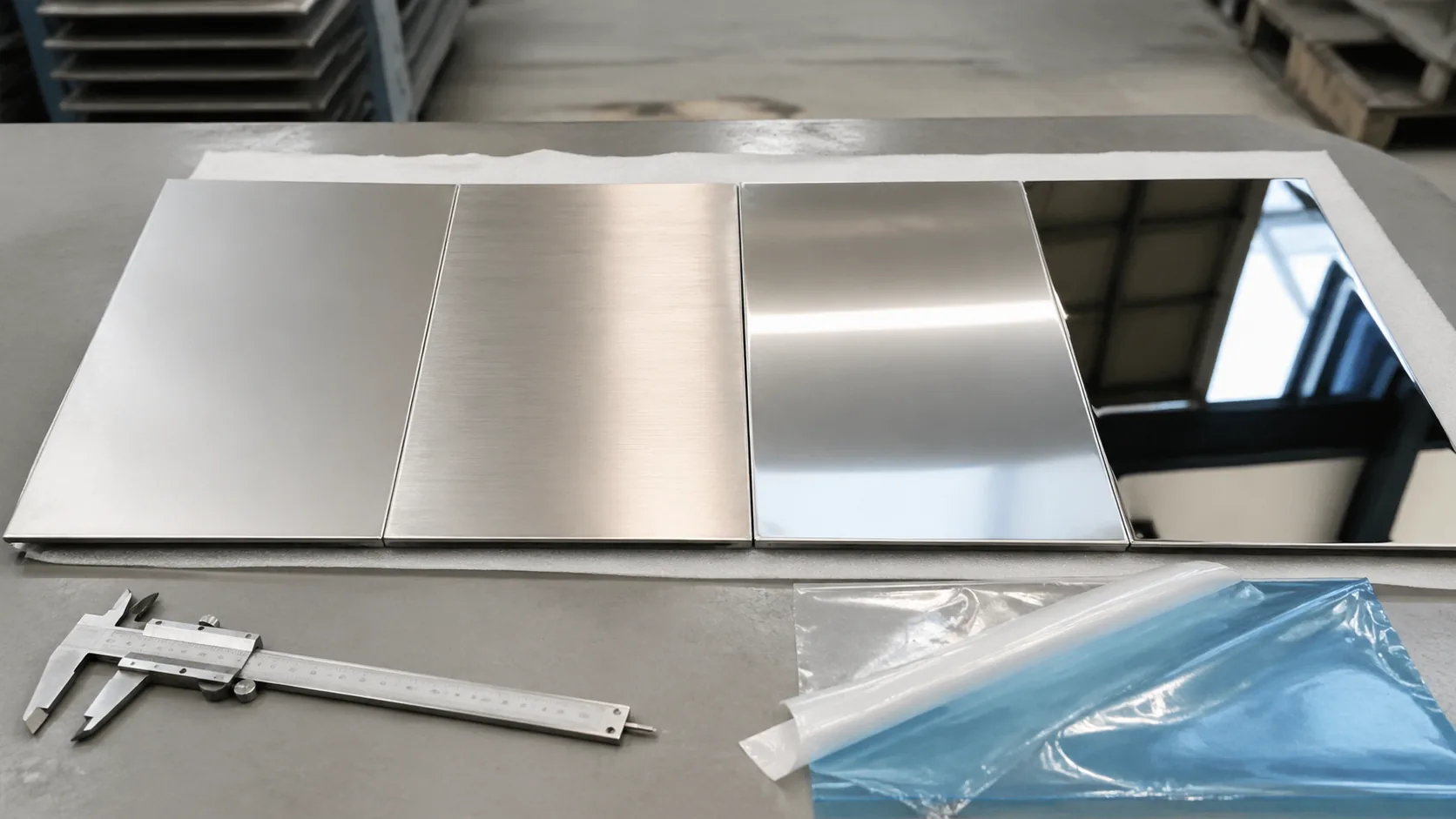
Finish names can vary by standard and supplier, so always confirm the exact requirement in the RFQ. Still, most buyer decisions fall into a few common groups.
| Finish | Practical character | Best fit | Watch point |
|---|---|---|---|
| 2B | Smooth, dull, general-purpose cold rolled finish | Industrial sheet, covers, parts needing moderate appearance | Not a decorative brushed finish |
| No. 4 / brushed | Directional satin grain | Visible panels, appliance-style parts, covers, trims | Grain direction and scratch consistency must be controlled |
| BA | Bright annealed, reflective but not always mirror | Cleaner visible surfaces, some formed parts | Handling marks and protection matter |
| Mirror / No. 8 style | Highly reflective polished surface | Decorative panels, trim, high-appearance applications | Expensive, scratch-sensitive, and hard to repair consistently |
| Pickled or industrial plate finish | Functional, less cosmetic | Heavy plate, structural or process equipment | Appearance may not satisfy visible applications |
For many stainless steel sheet and coil orders, 2B is the practical baseline: clean, serviceable, and usually cheaper than polished material. No. 4 belongs on parts where visible grain and controlled appearance are part of the requirement. BA and mirror finishes should be specified when the appearance value is real, not because the project team wants “premium stainless” without defining what premium means.
For hygienic equipment, the decision should connect to cleaning method, surface roughness expectation, weld cleanup, and product contact risk. A buyer working on tanks, tables, pipes, or covers for food and beverage systems should read finish together with grade selection, similar to the way stainless steel for dairy processing plants must be chosen by component and cleaning condition.
How Fabrication Changes the Finish Decision
Check what happens after the sheet leaves the rack
The drawing matters as much as the grade. A finish that looks correct on flat sheet may change after bending, cutting, welding, or polishing.
Bending can create marks, stretch the surface, or change how light reflects across a panel. If the visible side matters, define which side faces out, the grain direction, bend direction, protective film requirement, and acceptable marks. If the part has tight bends, review the stainless steel bending radius before approving the finish.
Cutting can leave burrs, heat tint, or edge discoloration depending on process and thickness. A brushed face with rough, sharp, or stained edges will still fail visual inspection. For visible parts, specify edge condition: deburred, rounded, polished, brushed after cutting, or protected during handling.
Welding is the bigger trap. Welding can discolor stainless steel and damage the surface near the joint. If a part must remain clean or visible, the RFQ should define weld cleanup, passivation expectation if required, and whether the finish must be restored after welding. Do not assume the original sheet finish will survive fabrication untouched.
What to Write in the RFQ
Turn the finish into measurable requirements
Finish problems usually start in the RFQ, not on the production floor. If the RFQ only says “stainless steel sheet, brushed finish,” the supplier still has to guess the grade, standard, thickness tolerance, grain direction, protective film, acceptable scratches, edge treatment, and inspection method.
Use a finish specification that is short but complete.
| RFQ item | What to specify |
|---|---|
| Grade and form | 304, 316L, 430, 2205, sheet, plate, coil, tube, or processed part |
| Finish name | 2B, No. 4, BA, mirror, pickled, or project-specific requirement |
| Visible side | One side, both sides, inside surface, outside surface, or non-visible |
| Grain direction | Along length, across width, matched panels, or not critical |
| Protection | PVC film, paper interleaving, pallet protection, or no film |
| Fabrication | Cutting, bending, welding, polishing, edge rounding, holes, or supplied flat |
| Inspection | Scratch limit, finish sample, surface roughness if required, photo approval, or third-party inspection |
If the finish must match an existing part, send a sample or agree on a reference sample before mass production. Words such as “beautiful,” “premium,” and “smooth” do not control production. A sample, finish code, surface roughness requirement, and inspection rule do.
For export orders, packing is part of the finish decision. Mirror, BA, and brushed panels can be damaged before installation if the packaging allows rubbing, moisture, or metal contamination. Ask for protective film, clean separators, corner protection, and seaworthy packing when the surface value is high.
Conclusion
Choose stainless steel surface finish by service condition, not by shine. 2B suits many industrial parts. No. 4 works when visible grain is part of the requirement. BA and mirror finishes make sense when appearance justifies the extra handling, protection, and cost.
The safest RFQ names the finish, visible side, grain direction, fabrication route, protection method, and inspection rule. Without those details, the supplier is not quoting the same surface you expect to receive.
Author: NewQiujing Group