304 vs 316 Stainless Steel for Food Processing Equipment
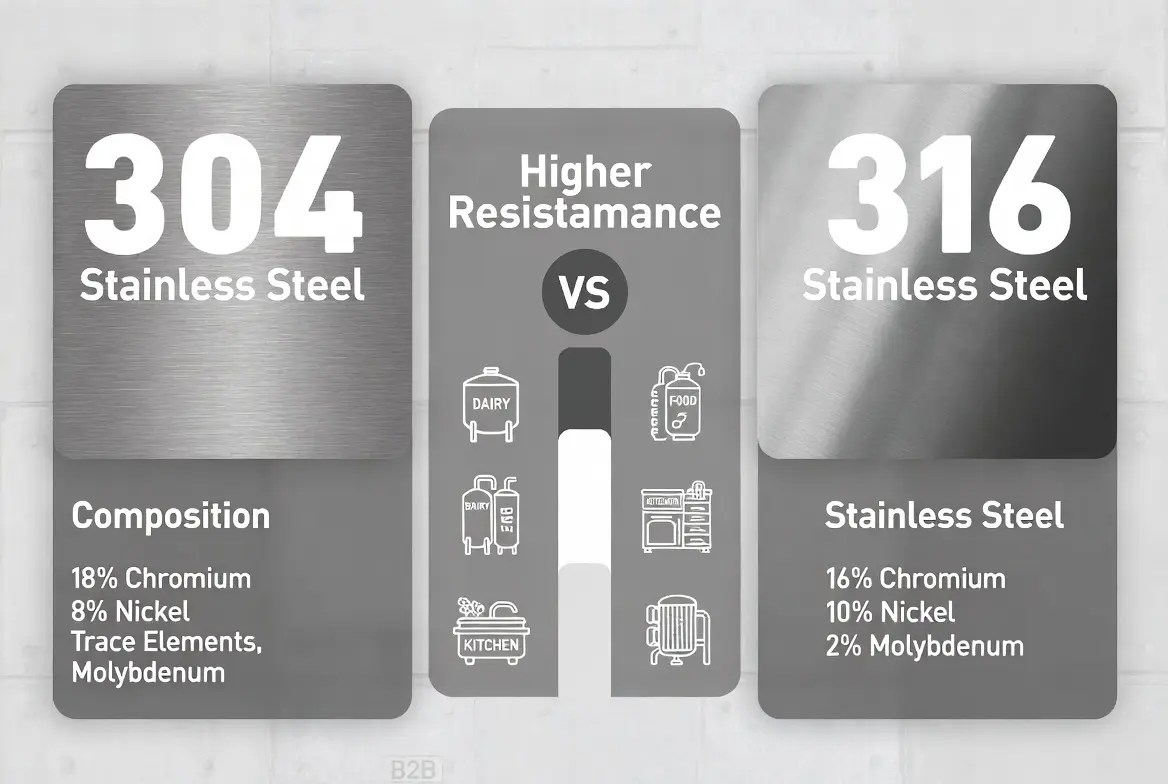
If you are choosing material for food processing equipment, the short answer is simple: 304 stainless steel is the standard choice for general food applications, while 316 stainless steel is the safer option for chloride-rich, acidic, or more aggressive cleaning environments. The main difference is molybdenum. Typical 316 grades contain about 2.0–3.0% Mo, which improves resistance to pitting and crevice corrosion, while 304 does not. Typical composition ranges often cited in industry references are 304: 18–20% chromium and 8–10% nickel, versus 316: 16–18% chromium and 10–14% nickel plus 2–3% molybdenum.
Key Takeaways
- 304 works for most standard food, dairy, and beverage processing lines.
- 316 is better when salt, acids, or harsh CIP chemicals raise corrosion risk.
- The biggest material difference is 2–3% molybdenum in 316.
- 316 can cost roughly 30–40% more in some processing-system contexts.
- In hygienic applications, surface finish matters almost as much as grade selection.
- For suppliers, stock depth, cut-to-size ability, and export packaging affect the real buying outcome.
What Is the Real Difference Between 304 and 316?
304 vs 316 stainless steel comparison for food processing equipment
304 and 316 are both austenitic stainless steels widely used in food-contact and food-processing environments. The reason buyers compare them so often is that both are considered food-grade in many practical applications, but their corrosion performance differs once chloride exposure, acid load, or intensive sanitation enters the picture. Public materials references consistently frame the choice around durability, hygiene, and lifetime cost rather than around basic food safety alone.
From a composition standpoint, the headline numbers are straightforward. 304 is commonly described as 18–20% Cr and 8–10% Ni, while 316 is commonly described as 16–18% Cr, 10–14% Ni, and 2–3% Mo. That molybdenum addition gives 316 a clear advantage in chloride-containing conditions, especially where pitting corrosion becomes a concern.
304 vs 316 Stainless Steel Quick Comparison
quick comparison table of 304 and 316 stainless steel for food equipment
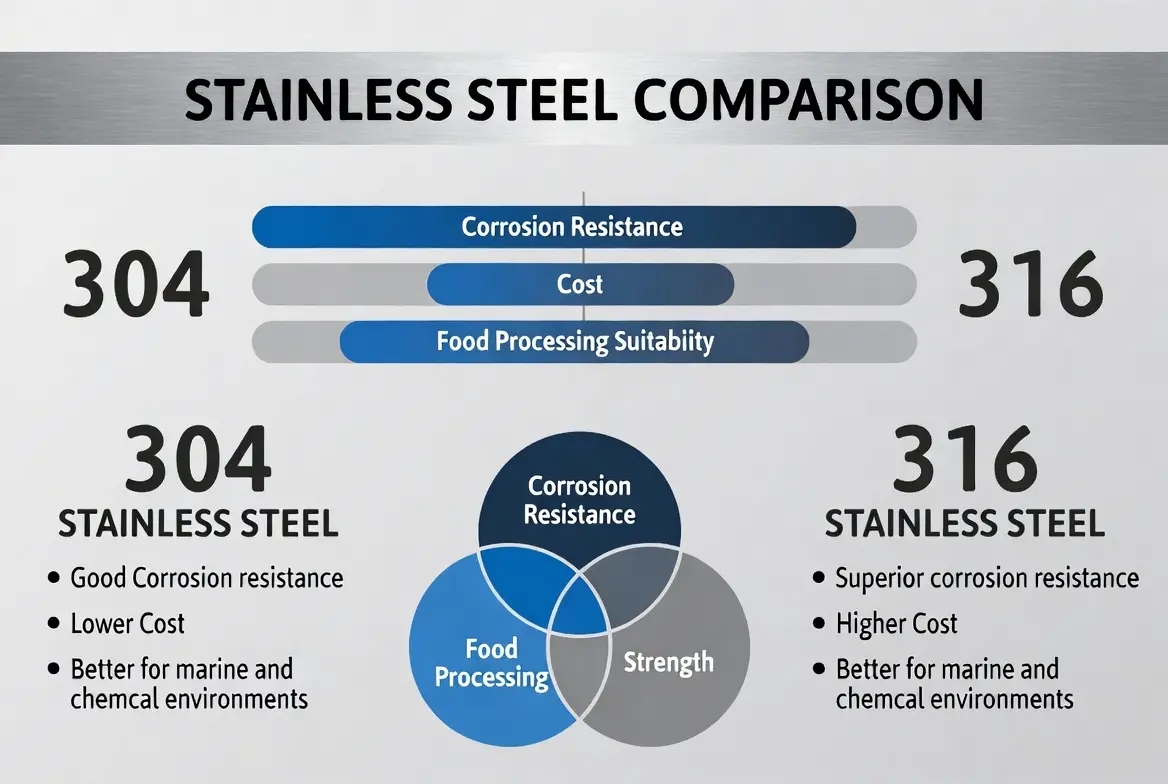
| Factor | 304 Stainless Steel | 316 Stainless Steel |
|---|---|---|
| Main composition | ~18–20% Cr, 8–10% Ni | ~16–18% Cr, 10–14% Ni, 2–3% Mo |
| Corrosion resistance | Good in standard environments | Better in chlorides, acids, and harsh cleaning conditions |
| Food processing use | General food, dairy, beverage | Salty, acidic, chemical-intensive lines |
| Relative cost | Lower | Higher, sometimes 30–40% more |
| Best for | Standard hygienic equipment | High-risk or long-life demanding systems |
When Is 304 Enough?
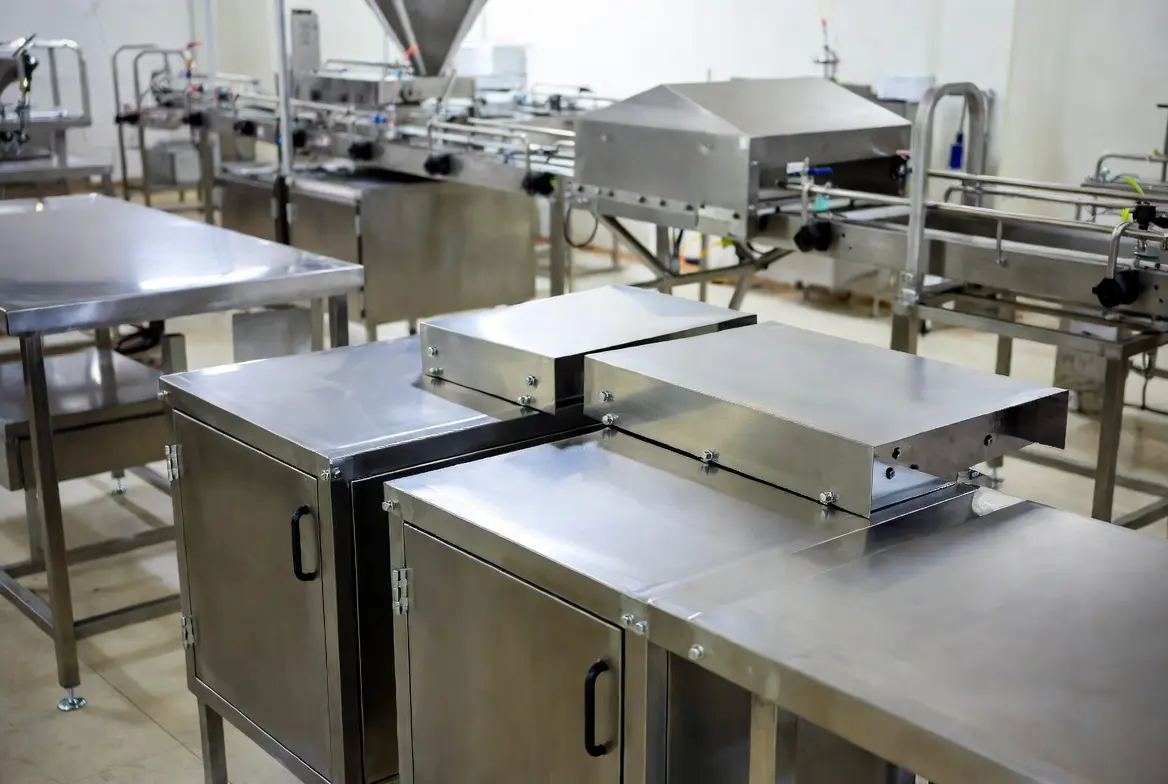
304 stainless steel used for standard food processing equipment and worktables
For many buyers, 304 is the right answer. It is widely used in food and beverage production facilities, and public industry guidance repeatedly describes it as the most common food-grade stainless alloy for general processing environments. If your production line handles standard moisture, standard washdown, and no unusual chloride or acid load, 304 often provides the best cost-performance balance.
Typical examples include machine covers, work tables, enclosures, splash guards, cabinet structures, and many indoor fabrication parts. In these applications, buyers usually care more about thickness tolerance, finish consistency, weld quality, and delivery reliability than about paying a premium for 316. That is why 304 stainless steel sheet remains the default material for a large share of food equipment fabrication.
When Should You Move to 316?
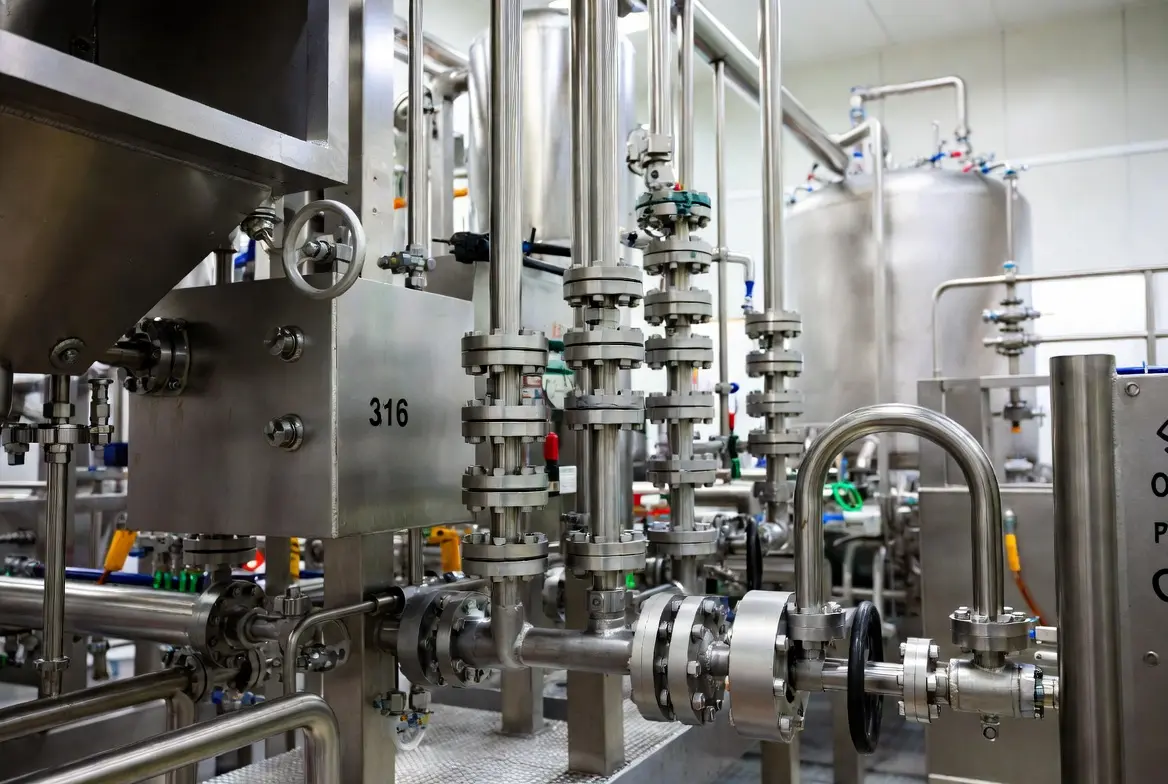
316 stainless steel for harsh food processing and CIP cleaning environments
You should move to 316 when corrosion risk becomes expensive. That usually means one or more of the following: salt or brine exposure, acidic formulations, more aggressive sanitizers, coastal humidity, or cleaning regimes that repeatedly challenge the passive layer on the metal surface. Multiple industry sources say that 316 is preferred in these harsher environments because the added molybdenum improves resistance to chlorides and chemical attack.
This matters in seafood lines, pickling or sauce systems, more demanding beverage systems, and process areas using frequent CIP cycles. 316 is commonly chosen where chemical exposure and sterilization demands are higher, while 304 remains adequate for general food, dairy, and beverage processing. 316 may also be 30–40% more expensive, which reinforces the idea that the right choice depends on exposure conditions, not on prestige.
Does Surface Finish Matter in Hygienic Applications?
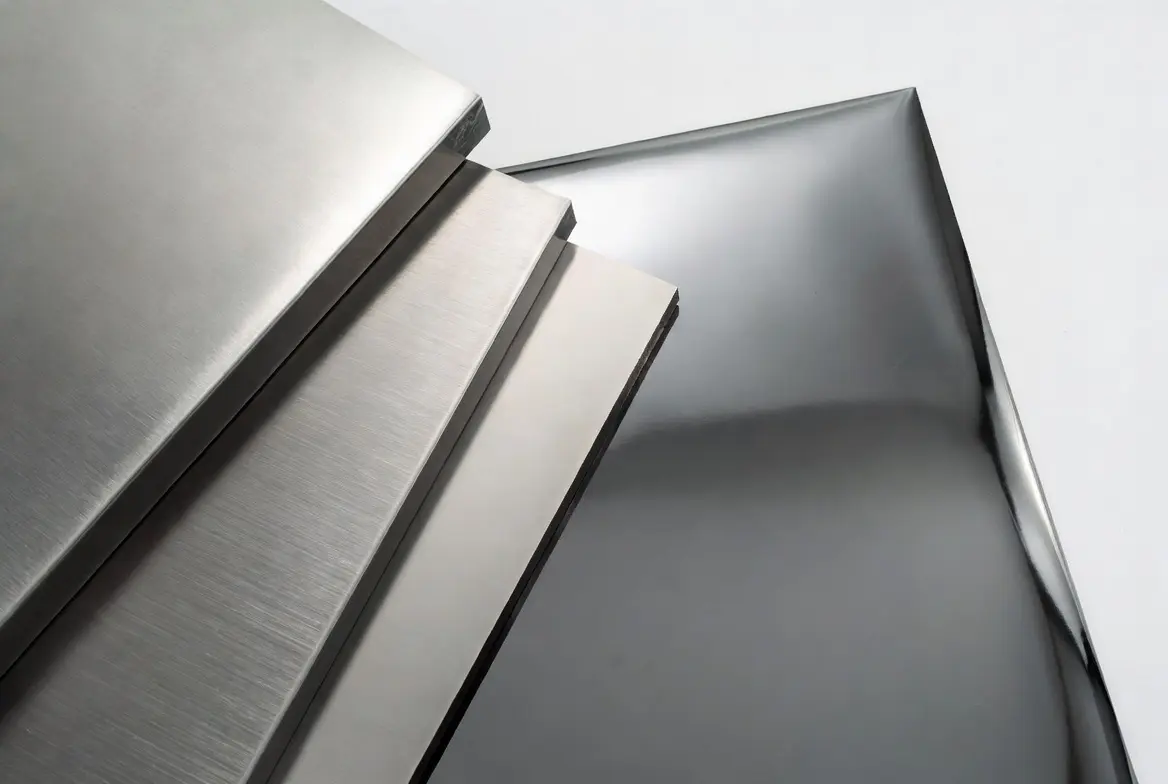
stainless steel surface finishes for hygienic food processing application
Yes. Surface finish is one of the most overlooked topics in this whole comparison. Several food-grade and hygienic application references point out that smoother finishes reduce microbial adhesion, improve cleanability, and make it easier to maintain hygienic conditions over time. Electropolished or highly refined finishes can also improve the surface condition compared with rougher mill surfaces.
This is where many comparison articles stop too early. Buyers do not only choose between 304 and 316; they also choose between 2B, BA, brushed, polished, or electropolished surfaces depending on fabrication and hygiene requirements. In real RFQs, the wrong finish can cause as much trouble as the wrong grade, especially in visible surfaces, cleanability-sensitive components, or welded assemblies.
Sheet vs Plate: Which One Should You Buy?
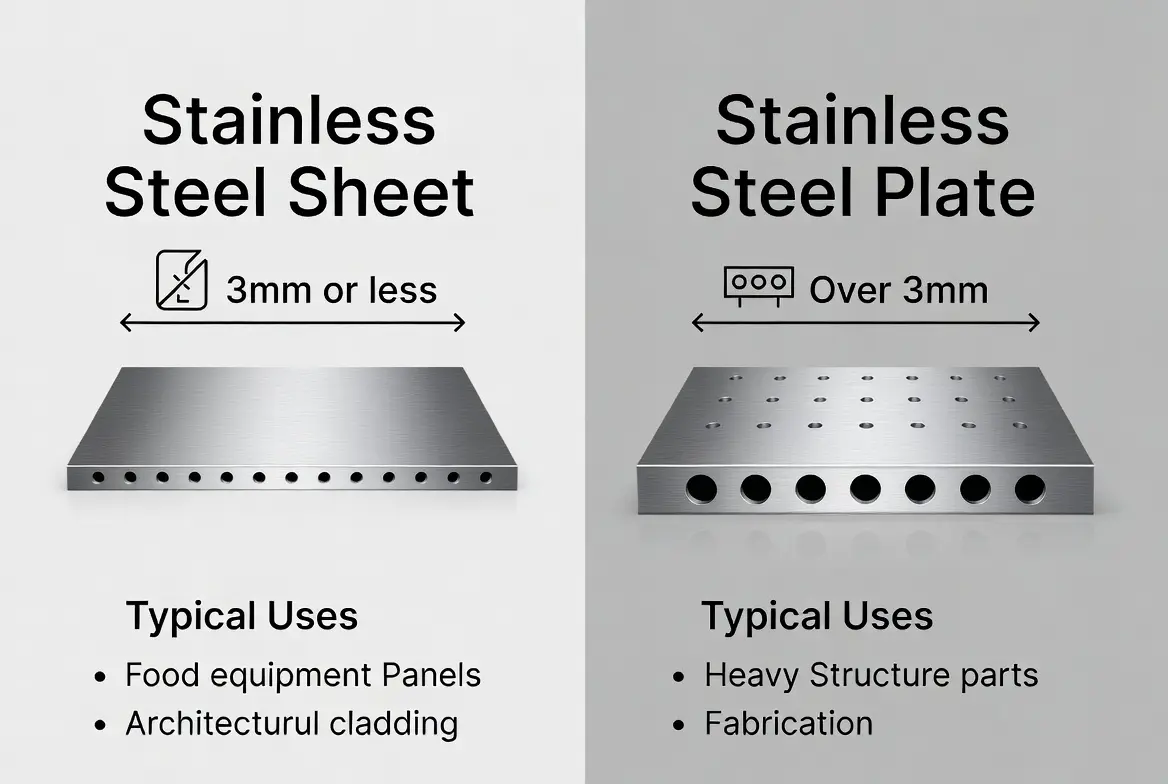
difference between stainless steel sheet and plate for food equipment
This is one of the best places for your article to beat generic comparison pages. Most SERP competitors explain 304 vs 316, but few extend the discussion to material form selection. For actual food equipment buyers, that matters a lot.
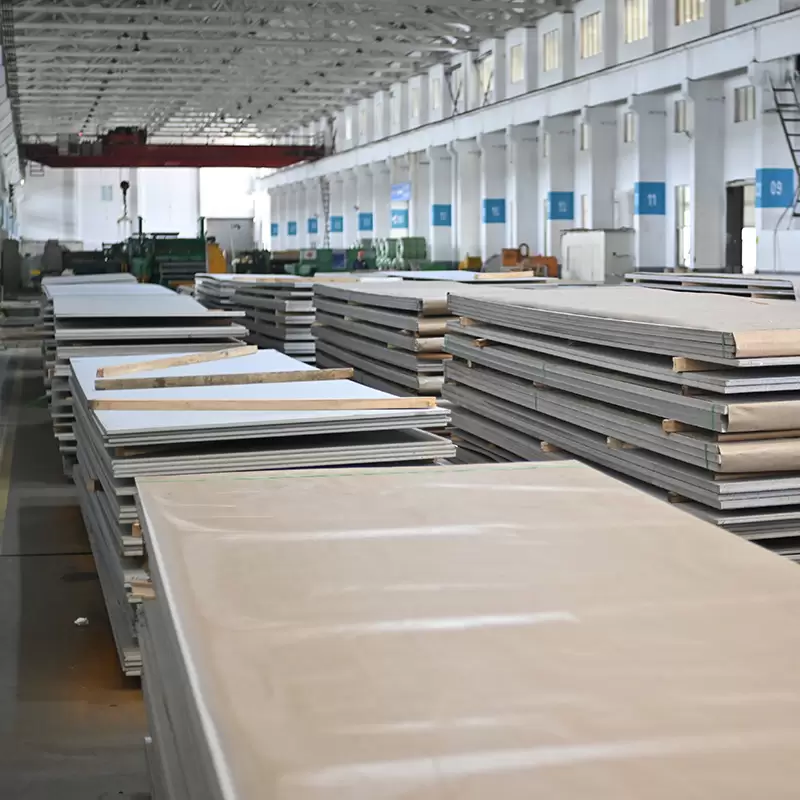
As a practical rule, sheet is generally used for lighter fabrication, formed parts, covers, tank skins, and outer equipment panels, while plate is more suitable for heavier structures, higher-load bases, thicker-duty supports, or projects requiring stronger rigidity. If the buyer is sourcing housings, guards, or formed food-contact components, stainless steel sheet is usually the better fit. If the buyer is building heavy structural sections or thicker fabricated bodies, plate may be the better answer.
How to Evaluate a Stainless Steel Supplier in China
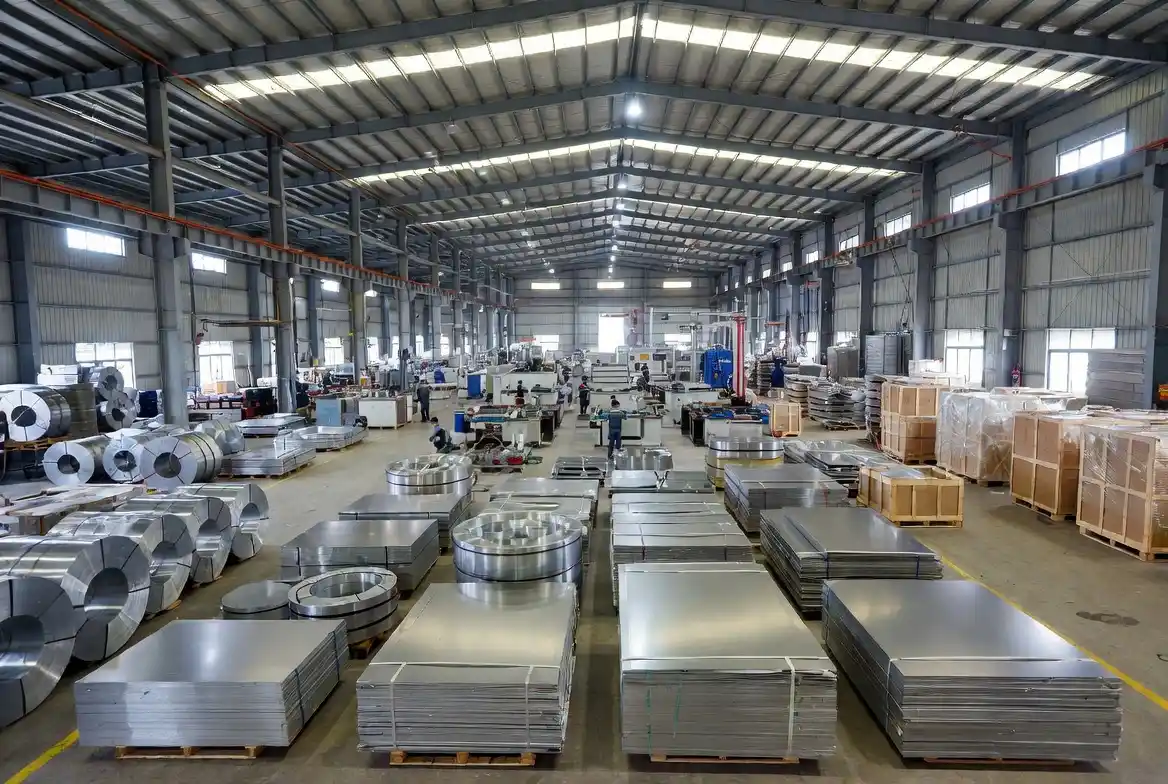
stainless steel supplier in China with stock processing and export packaging
This is the second major gap most existing SERP content misses. Comparison articles usually stop at metallurgy, but buyers eventually need a supplier. For a B2B project, the supplier decision should include at least these checkpoints:
- Grade availability — Can the supplier provide 304, 304L, 316L, duplex, and related grades from stock?
- Processing support — Can they cut, bend, weld, laminate, or supply custom dimensions?
- Quality documents — Can they provide MTCs, inspection records, and finish confirmation?
- Surface protection — Is anti-scratch film or protective packaging available for export?
- Lead time and inventory — Does the supplier really have stock, or only trading access?
Instead of ending with generic advice, a practical article should tell buyers exactly what information to send: grade, thickness, finish, width and length, quantity, application, and whether fabrication is needed.
How to Choose Between 304 and 316 for Your Project
A simple buying framework works better than repeating metallurgy. Ask these five questions:
- Will the equipment contact salty, acidic, or chloride-rich material?
- How strong are the cleaning chemicals and how frequent is the cleaning cycle?
- Is the material in direct food-contact zones or only structural zones?
- Do you need sheet for forming, or plate for heavier fabrication?
- Is the main goal lower upfront cost or lower long-term corrosion risk?
If the environment is normal, 304 is often enough. If downtime, corrosion, or hygiene failure would be expensive, 316 is usually the safer investment. And if appearance, cleanability, or surface protection is important, finish selection should be specified as early as the grade itself.
Frequently Asked Questions
Is 304 stainless steel food grade?
Yes. Public industry sources commonly identify 304 stainless steel as a food-grade material for many food and beverage processing applications. The real issue is not whether 304 is food grade, but whether its corrosion resistance is enough for the specific cleaning chemicals, chloride exposure, and service conditions in your plant.
When should you choose 316 over 304?
Choose 316 when chloride exposure, acidic media, stronger sanitation chemicals, or coastal humidity increase corrosion risk. Its 2–3% molybdenum content improves resistance to pitting and chemical attack, which is why many sources recommend it for more demanding food processing conditions.
Does surface finish affect hygienic performance?
Yes. Smoother finishes reduce areas where residues and microorganisms can remain, and several references specifically note the hygiene advantage of polished or electropolished surfaces in demanding food and beverage environments.
Should I buy stainless steel sheet or plate for food equipment?
It depends on the project. Stainless steel sheet is generally better for lighter fabrication, covers, skins, and formed components, while plate is better for heavier structures, high-load parts, and thicker-duty fabrication.
Final Thoughts
For most standard food processing equipment, 304 vs 316 stainless steel is a decision about environment, maintenance, and risk—not just grade preference. 304 remains the practical choice for many general lines, while 316 is the stronger answer when chlorides, acids, aggressive sanitation, or long service life requirements raise the cost of corrosion failure.
The best-performing article is not one that simply repeats “316 is better.” It is one that connects grade selection + surface finish + sheet vs plate + supplier capability into a practical buying path. That angle is much more useful for real buyers and much more likely to move readers from blog traffic to RFQ inquiries.
Related Guides: Duplex 2205 vs 316L | ASTM A240 vs A276 Standards
Related material guides
Author: NewQiujing Group