316 Stainless Steel Sheet for Marine Hardware: What Buyers Should Specify
Calling 316 stainless steel sheet “marine grade” is convenient, but it is not enough for a purchase order. Marine hardware fails in details: a trapped washer, a rough cut edge, a welded corner that was never cleaned, or a sheet thickness chosen from price instead of load and exposure.
316 is often the right starting point for exposed marine hardware because its molybdenum content improves resistance to chloride attack compared with 304. That does not make it immune to seawater. If the part sits in a crevice, stays wet, collects salt, or is welded and left with heat tint, the material grade alone will not protect the project.
The useful buying question is not “Is 316 marine grade?” It is: what exposure, thickness, finish, edge condition, forming, welding, inspection, and packing details must be fixed before quotes are compared?
Where 316 Sheet Fits in Marine Hardware
316 sheet is a good default for many brackets, plates, panels, covers, guards, nameplates, backing plates, and formed hardware parts that see salt spray or coastal humidity. It is especially useful when the buyer needs corrosion resistance with workable sheet fabrication.
Good fit: splash, spray, and coastal air
For above-water hardware exposed to salt spray, rain, washdown, and humid coastal air, 316 normally gives a better risk profile than 304. This is why buyers often start with 316 when they are choosing 304, 316, and duplex stainless steel for exterior marine parts.
The grade decision still starts with the exposure pattern. A cockpit trim panel that dries between uses is not the same problem as a bilge bracket that stays damp. A decorative deck plate is not the same problem as a load-bearing hinge plate with fastener holes and trapped washers. Write the exposure into the RFQ instead of relying on the grade name to imply it.
Weak fit: stagnant seawater and tight crevices
316 is not the safe answer for every seawater contact point. Localized pitting and crevice corrosion are the failure modes that matter. A flat exposed surface may look clean while the area under a gasket, clamp, washer, lap joint, or fouling deposit becomes starved of oxygen and aggressive enough to attack the steel.
That is why submerged parts, constantly wet joints, stagnant seawater pockets, and uncleanable crevices need a harder review. Sometimes 316L is enough if the design drains and dries. Sometimes duplex 2205, 2507, or a different alloy family is the better conversation. The mistake is treating “316 sheet” as a universal marine answer before the part geometry is known.
What to Put in the RFQ Before You Compare Prices
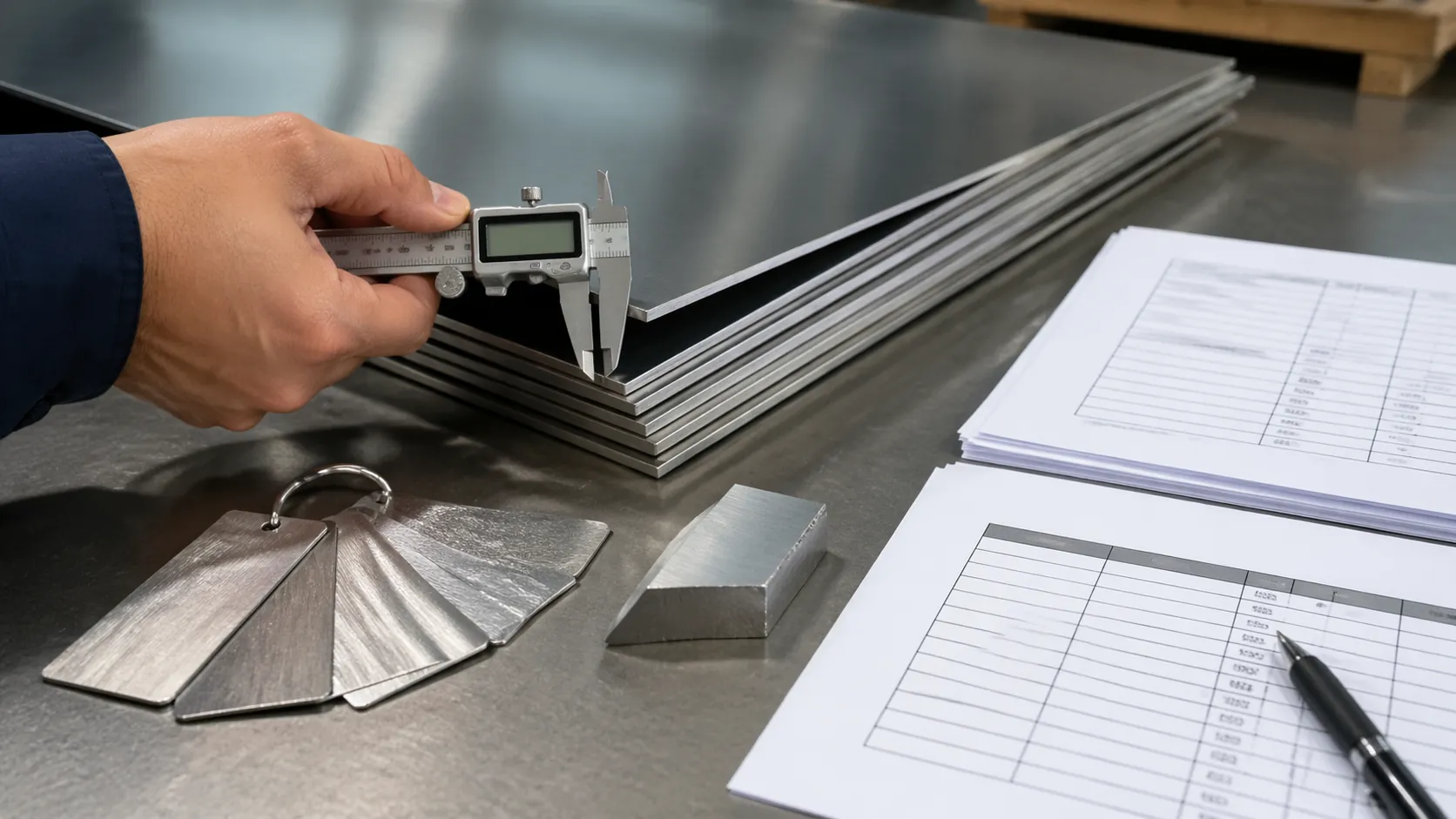
Most poor 316 sheet quotes are not dishonest. They are incomplete. If the RFQ only says “316 stainless sheet, marine use,” every supplier has to guess the same missing details differently.
| RFQ item | What to specify | Buying risk controlled |
|---|---|---|
| Grade | 316 or 316L, with standard and MTC requirement | 316L is often preferred where welding or heat-affected zones are part of the design. |
| Product form | Sheet, plate, or coil-cut sheet | Product form affects thickness range, flatness, tolerance, and applicable standards. |
| Thickness | Nominal thickness plus tolerance requirement | Hardware that bends, spans, or carries load should not be bought by nominal thickness alone. |
| Surface finish | 2B, No. 4, BA, mirror, or project-specific finish | Smoother finishes usually clean more easily and hold fewer chloride deposits. |
| Edge condition | Slit, sheared, laser cut, deburred, rounded, or polished | Rough or contaminated edges are common starting points for staining and corrosion complaints. |
| Fabrication | Cutting, bending, holes, welding, or supplied flat | Fabrication changes bend radius, grain direction, heat tint, and cleaning requirements. |
| Exposure | Coastal air, splash, washdown, bilge, submerged, or crevice-prone | The same grade behaves differently when it dries often versus staying wet. |
| Documents | MTC, heat number traceability, third-party inspection if needed | Buyers need proof that the supplied sheet matches the ordered grade and standard. |
| Packing | PVC film, paper interleaving, pallet, seaworthy packing | Marine hardware sheet often fails commercially before installation if surfaces arrive scratched or contaminated. |
Standard and product form
For flat stainless products, buyers should check whether the order belongs under ASTM A240/A240M or another local specification. If the drawing mixes sheet, plate, bar, and machined parts, do not let one material note cover every form. The product-form issue is exactly why ASTM A240 vs A276 matters before the RFQ goes out.
MTC and heat traceability
A Mill Test Certificate is not paperwork for the file drawer. It is how the buyer confirms chemistry, grade, heat number, and mechanical data. For marine hardware, ask how heat numbers stay traceable after cutting or nesting. If multiple thicknesses are cut in one order, each batch needs a clear link back to its certificate.
Thickness, Finish, and Edge Condition Matter More Than Buyers Expect
Once the grade is set, the next arguments are usually thickness and price. That is too narrow. Marine hardware is exposed hardware. Finish, edge quality, and cleanability often decide whether the part still looks acceptable after one season.
Thickness is a design input, not only a cost input
Thin sheet can be correct for covers, labels, shims, and light guards. It can be wrong for brackets, backing plates, hinge plates, and parts with large unsupported spans. Thicker sheet may reduce deformation, but it can also make bending harder and increase springback.
Do not choose thickness from a catalog row alone. Match it to load, fastener spacing, hole size, bend geometry, vibration, and whether the part must stay flat after cutting. If the sheet will be laser cut and bent before shipment, the drawing should define tolerances after processing, not only raw sheet thickness.
Finish affects cleanability
Marine corrosion risk is not only about alloy chemistry. Salt deposits, dirt, polishing residue, carbon steel contamination, and rough surfaces all change the real exposure. A smoother, properly protected finish is easier to rinse and inspect. A rough, scratched, or contaminated surface gives chlorides more places to sit.
Visible hardware should carry a clear finish callout: 2B is not the same as No. 4, and No. 4 from two suppliers may not match visually unless grain direction and protective film are controlled. Functional hidden hardware may be less cosmetic, but surface cleanliness still matters.
Edges are corrosion starting points
Marine hardware has a lot of edges: holes, slots, tabs, corners, and cutouts. A sharp laser-cut edge, a sheared burr, or a carbon-contaminated grinding mark can become the first complaint even when the base sheet is correct.
If the finished part is exposed, ask for deburring, edge rounding, or edge polishing where appropriate. If the part will be handled by installers, edge quality is also a safety issue. Put that requirement in the RFQ, not in a post-delivery email.
Fabrication Changes the Material Decision
316 sheet is often bought as a raw material, but marine hardware is rarely used as a raw rectangle. It gets cut, drilled, bent, welded, brushed, packed, and installed against other materials. Each step can create a corrosion or fit-up risk.
Bending and springback
316 is ductile, but it still needs a realistic bend radius. A tight bend can crack, distort the surface, or create stress that becomes a problem in chloride exposure. Thickness, grain direction, bend angle, tool radius, and finish all matter.
If the part is formed before delivery, ask for the bend radius, inside radius tolerance, and whether the visible face must be protected. NewQiujing’s stainless steel bending radius guide is a useful internal reference before the drawing is finalized.
Welding and heat tint
When 316 sheet is welded, the weld area changes the discussion. Heat tint, oxide scale, poor cleaning, and trapped crevices near welds can reduce corrosion resistance. 316L is commonly preferred where welding is part of the part design because its lower carbon content reduces sensitization risk.
Do not simply write “316 welded part” and assume the supplier knows the cosmetic and corrosion expectations. Specify whether welds need pickling, passivation, brushing, grinding, or visual finish matching. If the hardware will be visible on a vessel, the acceptable weld appearance should be stated before production.
Holes, fasteners, and crevices
Many marine hardware parts fail around holes and fasteners because the design creates stagnant moisture. Washers, backing plates, rubber pads, sealants, and overlapping sheets can all create crevices. Stainless steel needs oxygen access to maintain its passive surface; trapped wet zones reduce that advantage.
Design for drainage and cleaning where possible. Avoid unnecessary lap joints. If dissimilar metals are nearby, consider galvanic effects and isolation methods. A material substitution alone cannot fix a design that holds salty water against the same hidden edge every day.
When 304, 316L, Duplex, or Nickel Alloy Should Be Considered
The buyer’s job is not to choose the most expensive alloy. It is to choose the lowest grade that safely survives the real service environment.
Use the grade table as a screening tool
| Situation | Practical starting point | Procurement note |
|---|---|---|
| Indoor dry cabin hardware | 304 may be enough | Confirm cleaning chemistry and visual expectations before downgrading. |
| Exterior coastal hardware that dries | 316 or 316L | Control finish, edge quality, and maintenance assumptions. |
| Welded sheet hardware | 316L | Specify weld cleaning, heat tint removal, and post-weld finish. |
| Constant splash or bilge moisture | 316L with design review | Avoid crevices and stagnant zones; consider higher alloy if cleaning is poor. |
| Submerged or stagnant seawater contact | Review duplex or higher alloy | Do not assume 316 is enough because it is called marine grade. |
| Aggressive chemical plus chloride exposure | Duplex, 904L, or nickel alloy review | Define temperature, chemical concentration, and cleaning cycle before sourcing. |
This is also where the existing question of when to upgrade from 304 to 316 becomes too simple. In marine hardware, the next decision after 316 may not be “more 316.” It may be better drainage, better finish, 316L for welding, duplex for chloride strength, or a redesign that removes the crevice.
Supplier Checks Before You Approve the Order
For buyers sourcing 316 sheet or processed marine hardware from China, the supplier check should be practical. A serious quote should answer with documents and process details, not adjectives.
Ask these questions before the purchase order
- Which standard and grade will be supplied: 316 or 316L, and under which flat-product specification?
- Can each sheet or cut part be traced to the MTC and heat number?
- What thickness tolerance, flatness, and surface finish are included in the quote?
- How will cut edges, holes, slots, and corners be finished?
- If bending is included, what inside radius and tolerance will be used?
- If welding is included, how will heat tint and weld discoloration be treated?
- How will the surface be protected during packing and export shipping?
- Can third-party inspection be arranged before shipment if the order requires it?
NewQiujing can naturally fit this type of order when the buyer needs stainless sheet plus cutting, bending, welding, MTC support, and export packing in one procurement path. The important point is to send a complete RFQ. Processing problems usually start in the RFQ, not on the machine.
What a weak quote looks like
A weak quote says “316 sheet, good quality, marine use” and gives a price. That is not enough. It does not tell you standard, thickness tolerance, finish, edge condition, MTC traceability, packing method, or whether the supplier understands the final hardware geometry.
A useful quote states the grade, standard, thickness, finish, processing scope, documents, packing, lead time, and inspection options. That is the quote you can compare. The lowest unit price is not the lowest landed cost if the parts arrive scratched, mislabeled, too sharp, or unsuitable for the installation environment.
Conclusion
316 stainless steel sheet is a sensible starting material for many marine hardware parts, but “marine grade” should never be the whole specification. The real decision depends on exposure, crevice risk, sheet thickness, finish, edge condition, forming, welding, documentation, and packing.
If the part lives in coastal air and dries often, 316 may be exactly what the buyer needs. If the part traps seawater, hides under a washer, or carries an untreated weld, the grade name alone will not protect it. Write the service conditions and fabrication details into the RFQ before comparing prices.
Author: NewQiujing Group